Recipes from Ancient Texts
These are not wellness recipes. They are therapeutic preparations described in classical Ayurvedic texts — each matched to a constitution, a season, and a state of digestion.
Why Ayurvedic Cooking Is Not What You Think
In conventional nutrition, food is fuel. Macronutrients, calories, micronutrients — the body as a machine to be optimized. In Ayurveda, food is medicine. Every ingredient has a rasa (taste), a virya (energetic potency), and a vipaka (post-digestive effect). A meal is not chosen for calories. It is chosen for what it will do inside a specific body, in a specific season, with a specific digestive fire.
This is why the same food that nourishes one person can aggravate another. Kitchari calms a burning Pitta and grounds a scattered Vata — but eaten in excess by a Kapha constitution, it accumulates heaviness. The texts do not prescribe recipes universally. They prescribe conditions.
The 26 preparations below come directly from Charaka Samhita, Ashtanga Hridayam, Sushruta Samhita, and Bhavaprakasha — classical texts in active use for over two thousand years. Click any recipe to expand it.
What Makes a Recipe Ayurvedic
The Recipes
Sanskrit name, source text, dosha suitability, and season noted for each — click any card to see ingredients and method.
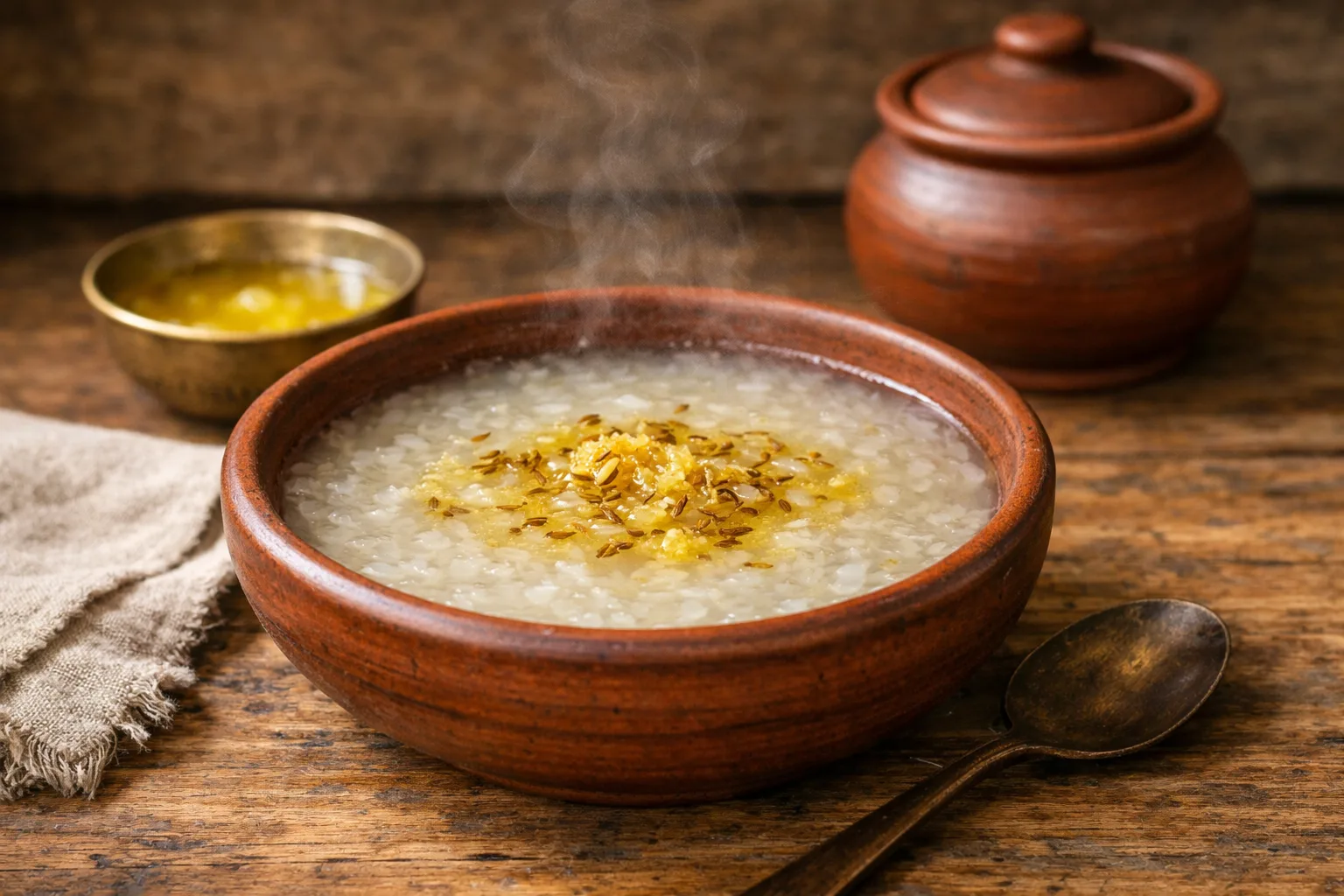
Ingredients
- ¼ cup white rice (old rice preferred)
- 3–4 cups water
- ¼ tsp cumin seeds
- ¼ tsp rock salt
- ½ inch fresh ginger
- 1 tsp ghee to finish
Method
- Rinse rice and combine with water in a heavy pot.
- Bring to a boil, reduce to lowest flame. Add cumin and ginger.
- Cook uncovered 40–50 minutes until rice dissolves into a thin broth.
- Add rock salt, remove ginger, stir in ghee. Eat warm.
Healing Purpose
First food after illness, fasting, or cleansing. Kindles depleted Agni without demanding digestive effort. Recommended for post-fever recovery, Vata disorders, and the elderly.
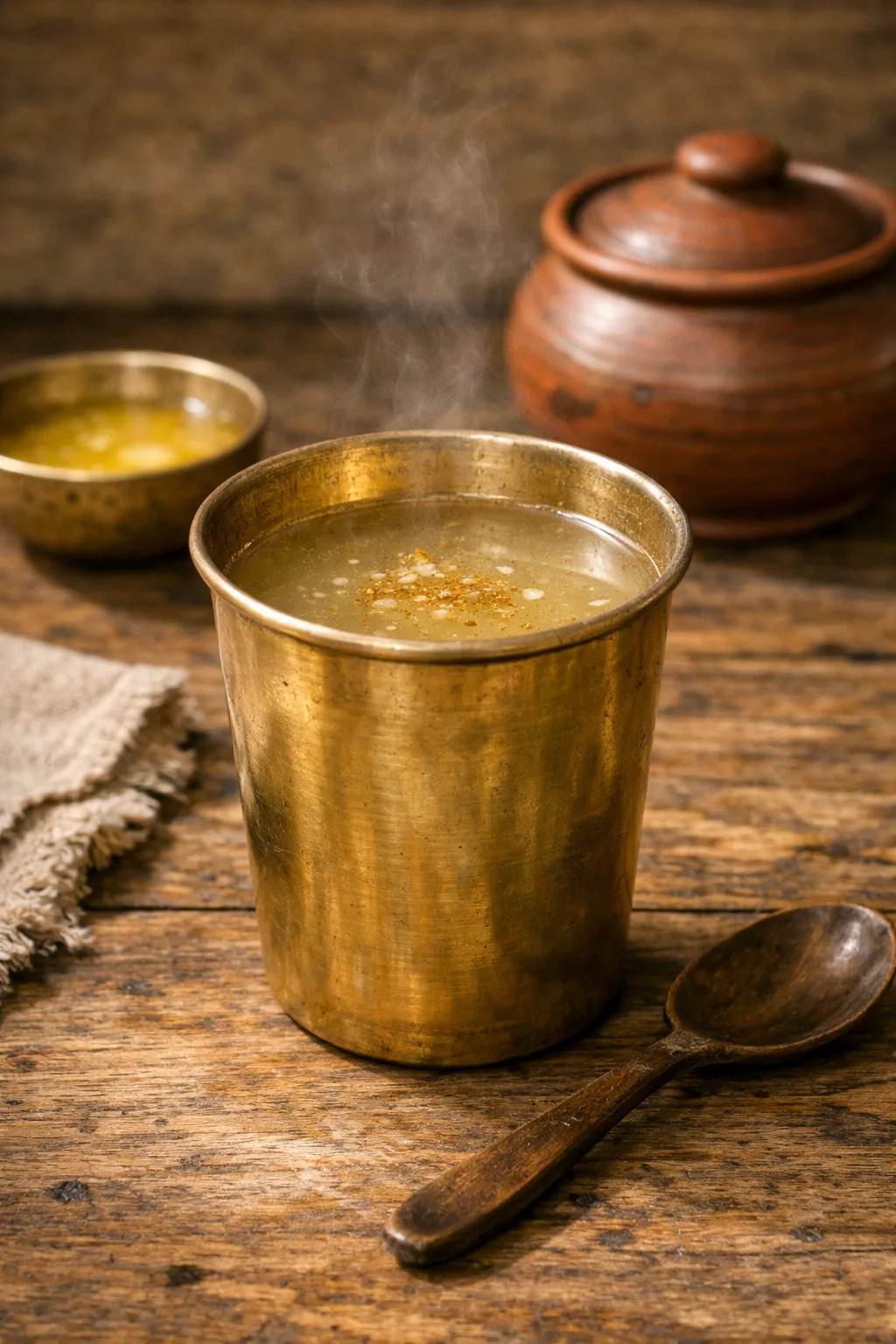
Ingredients
- 2 tbsp white rice
- 6 cups water
- Pinch of rock salt
- ¼ tsp dry ginger powder
Method
- Boil rice in water for 60 minutes until very soft.
- Strain out the rice solids — only the liquid is used.
- Add ginger powder and rock salt. Serve warm.
Healing Purpose
Even lighter than Kanji. The strained liquid alone is used in acute illness, extreme fever, or when the digestive system cannot process even soft grains. The lightest nourishment in the classical hierarchy of therapeutic foods.
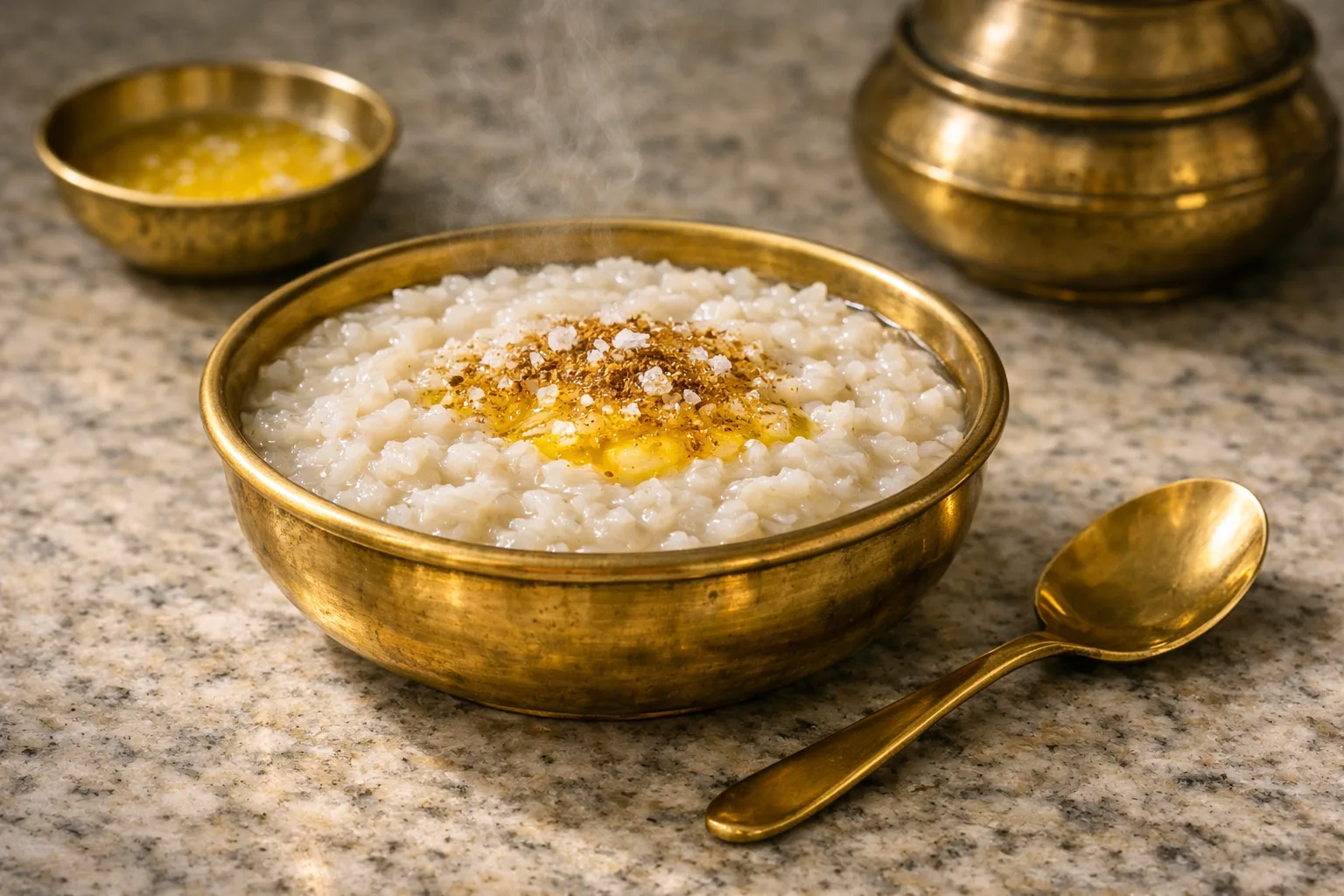
Ingredients
- ½ cup white rice
- 3 cups water
- 1 tsp ghee
- ¼ tsp rock salt
- ¼ tsp cumin powder
Method
- Cook rice in water on low heat for 45 minutes, stirring frequently.
- Unlike Kanji, do not let it dissolve completely — maintain a thick, porridge-like consistency.
- Add ghee, salt, cumin. Serve warm in the morning.
Healing Purpose
More substantial than Kanji or Peya. Grounding and nourishing for Vata constitution. Indicated when digestive strength has partially returned but solid food is still too heavy. The classical texts describe Vilepi as the step between liquid and solid diet during recovery.
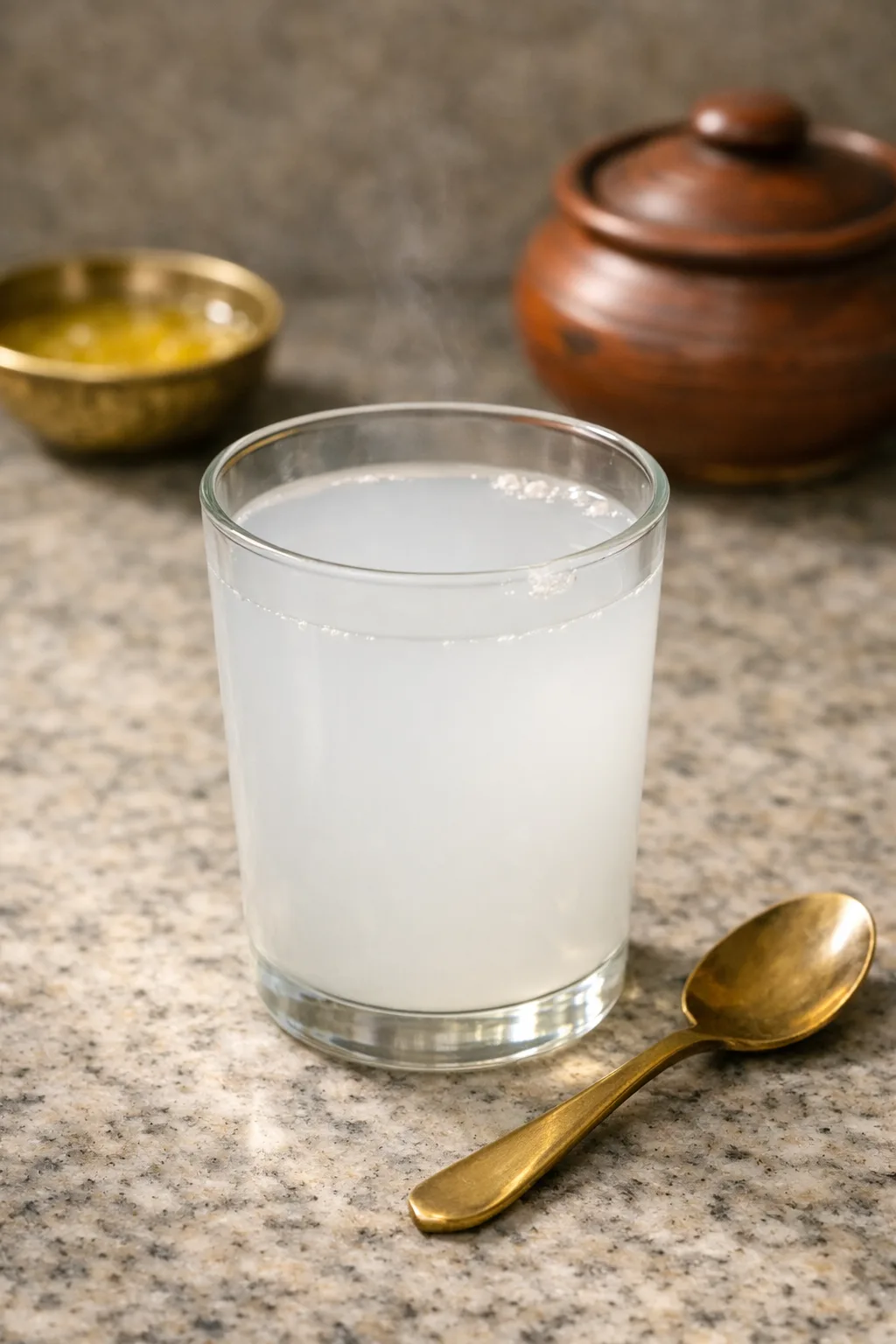
Ingredients
- 1 tbsp white rice
- 8 cups water
- Pinch of rock salt
Method
- Boil rice in water for 90 minutes on very low heat.
- Strain through a fine cloth — use only the cloudy starch water that passes through.
- Add the smallest pinch of rock salt. Serve at body temperature, not hot.
Healing Purpose
The subtlest preparation in the classical hierarchy — lighter than Peya. Given only when the patient cannot tolerate any solid matter at all. The starch water alone enters the channels without requiring digestive effort. First preparation given after Panchakarma therapies.
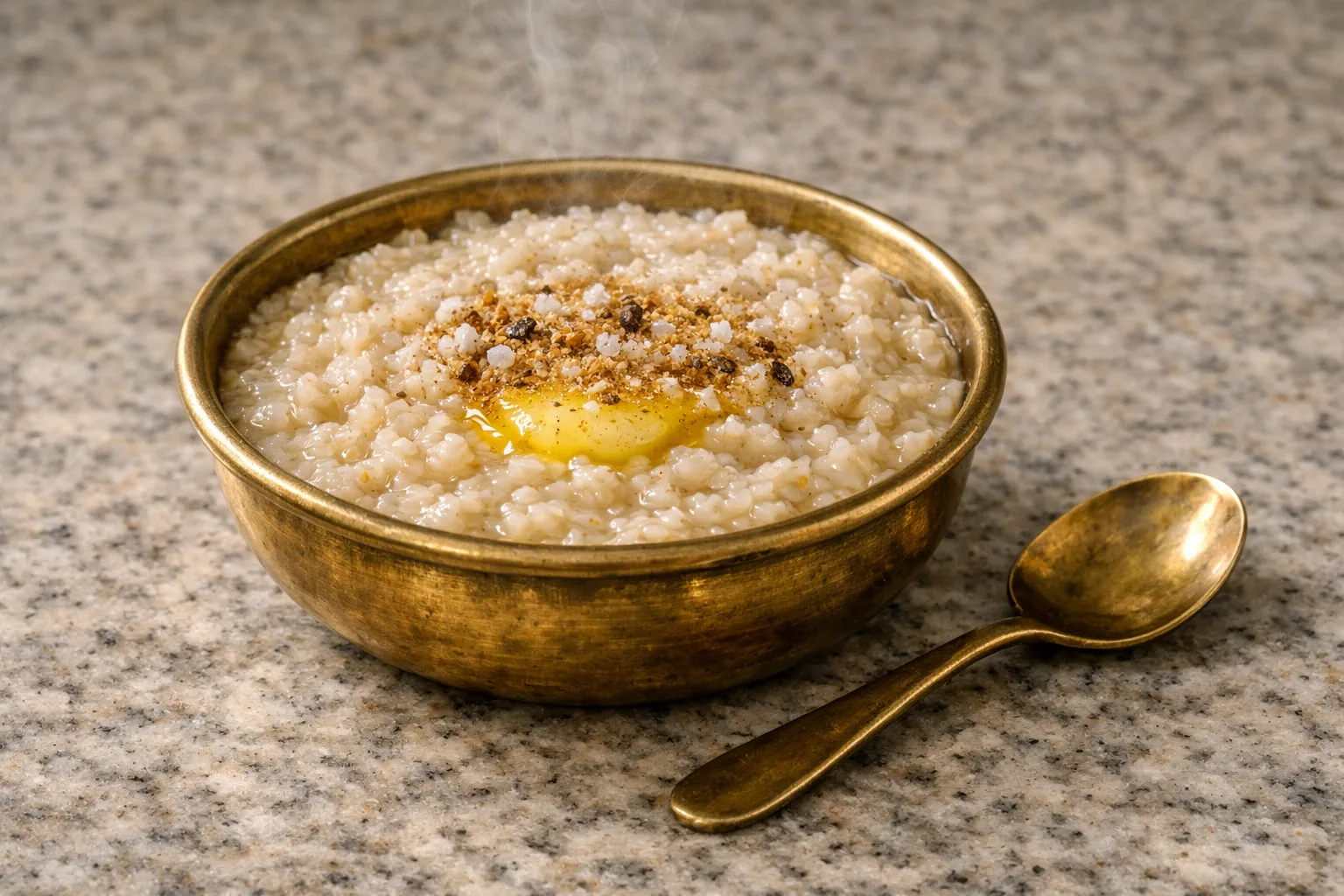
Ingredients
- ¼ cup barley (whole or pearl)
- 4 cups water
- ¼ tsp dry ginger powder
- ¼ tsp long pepper (optional)
- Rock salt to taste
- 1 tsp ghee to finish
Method
- Soak barley 4 hours. Drain and rinse.
- Boil with water. Add ginger and long pepper, reduce to low.
- Cook 60–75 minutes until fully broken down into a thick gruel.
- Add salt and ghee. Serve warm.
Healing Purpose
Prescribed for convalescence, debility, and weak digestion. Barley is specifically recommended for urinary health, weight balance, and clearing Kapha from the channels — benefits rice-based gruels do not offer.
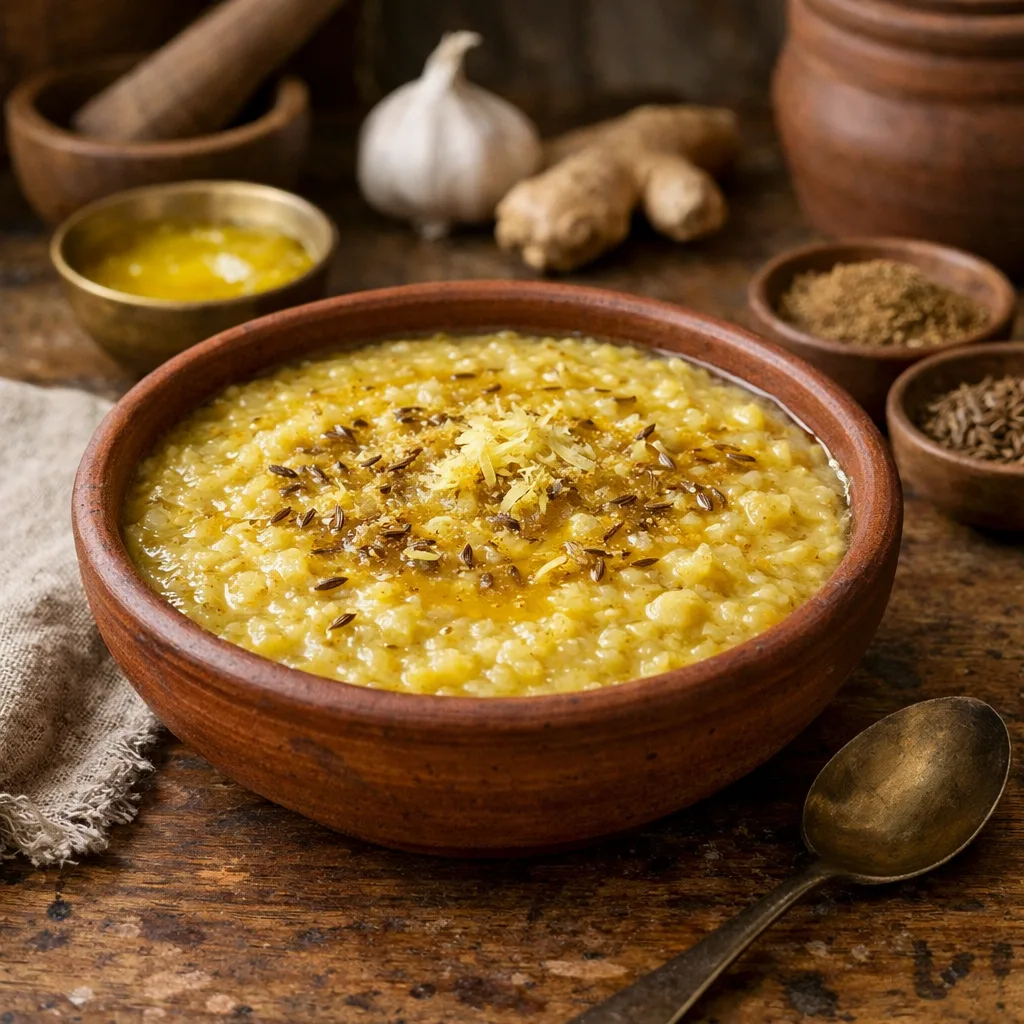
Ingredients
- ½ cup basmati rice
- ¼ cup split mung dal
- 1½ tbsp ghee
- ½ tsp cumin seeds
- ¼ tsp turmeric
- ½ tsp coriander powder
- ¼ tsp fennel seeds
- ½ inch fresh ginger, grated
- 3½ cups water
- Rock salt to taste
Method
- Rinse rice and dal together. Soak 20 minutes.
- Warm ghee; add cumin and fennel until fragrant.
- Add ginger, turmeric, coriander. Stir 30 seconds.
- Add rice and dal, coat with spices. Add water and salt.
- Cook covered 25–30 minutes until soft and porridge-like.
Healing Purpose
The only complete food that is simultaneously easy to digest, nutritionally whole, and balancing for all three doshas. The cornerstone of Ayurvedic dietary therapy and Panchakarma mono-diet.
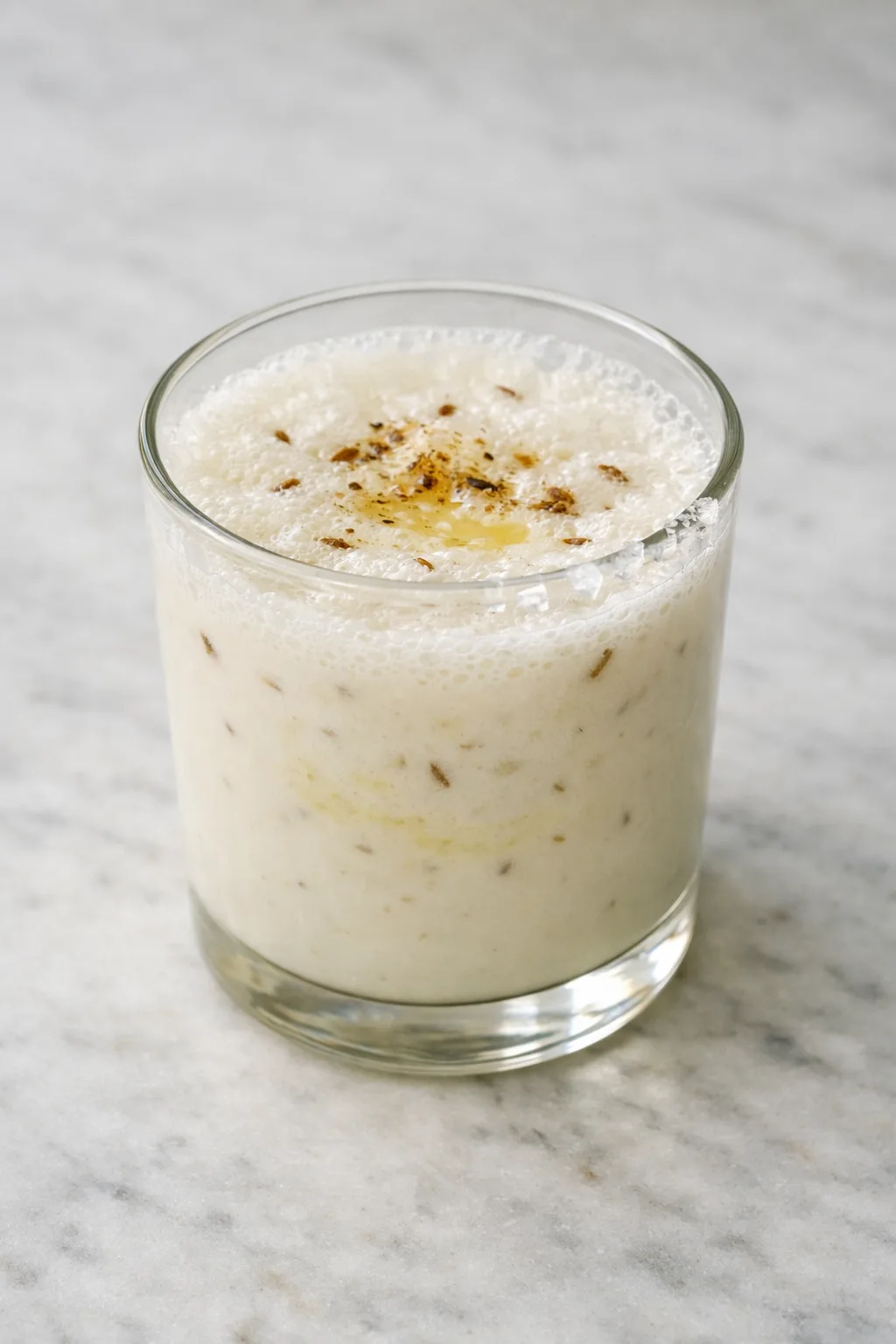
Ingredients
- ¼ cup plain yogurt (room temp)
- ¾ cup warm water
- ¼ tsp cumin, dry roasted and ground
- Pinch rock salt
- ¼ tsp fresh ginger juice (optional)
Method
- Bring yogurt to room temperature.
- Churn yogurt and warm water together 2–3 minutes until frothy.
- Add ground cumin, rock salt, ginger juice. Stir and serve.
Healing Purpose
Charaka calls Takra "nectar for humans." Unlike yogurt, churned buttermilk is light and actively kindles Agni. Classical treatment for malabsorption, IBS, and sluggish digestion. Taken after the main meal.
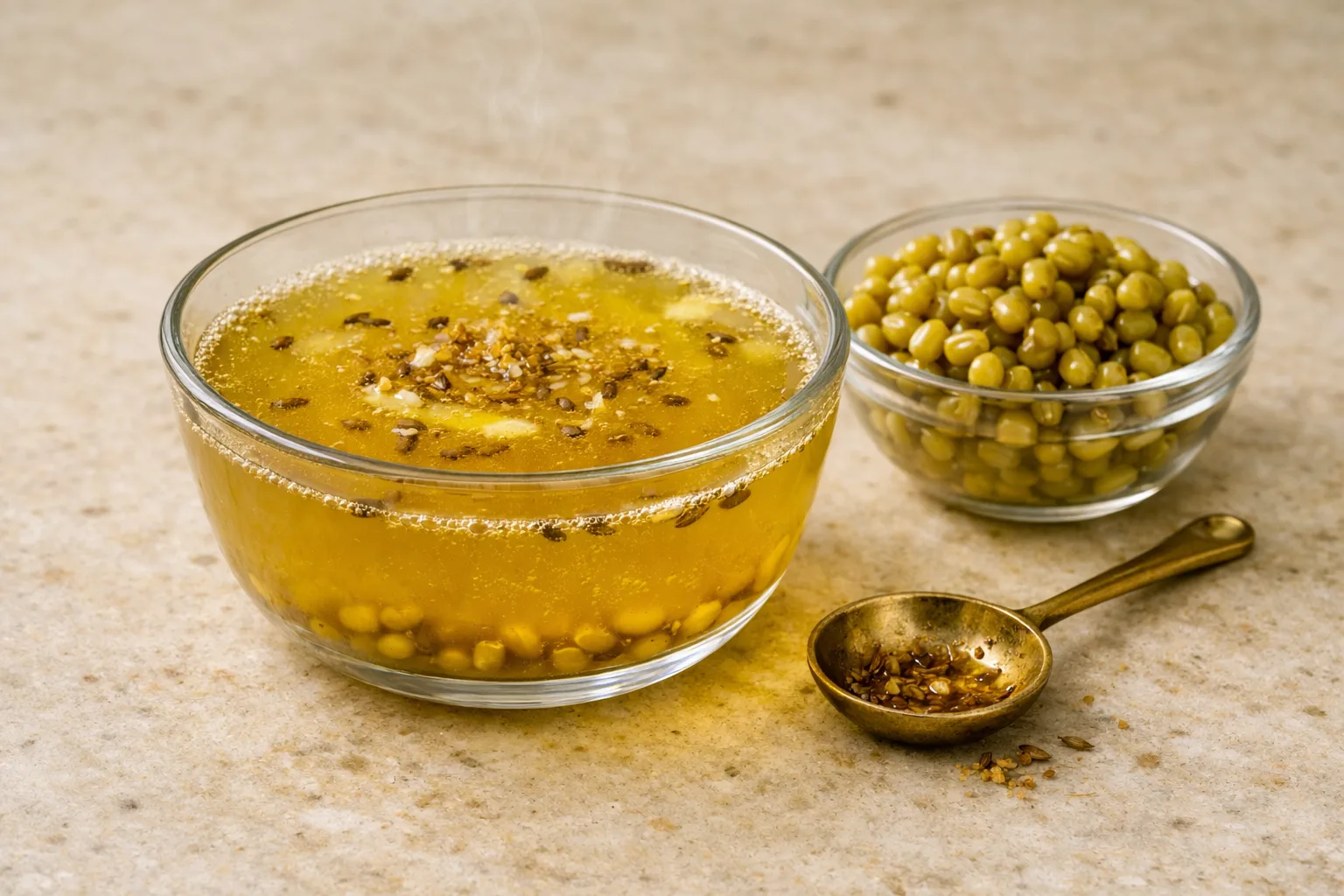
Ingredients
- ¼ cup whole green mung beans
- 4 cups water
- ½ tsp cumin seeds
- ¼ tsp turmeric
- ¼ tsp dry ginger
- Rock salt to taste
- 1 tsp ghee
Method
- Boil mung beans in water until completely soft (40–50 minutes).
- Strain and reserve only the broth.
- In a small pan, warm ghee; add cumin until it pops. Add ginger and turmeric.
- Pour tempering into broth. Add salt. Serve warm.
Healing Purpose
The lightest form of protein available in Ayurvedic medicine. Mung is described as the most digestible legume. Yusha (broth) form removes the fibre burden. Suitable for post-illness, elderly, and those with very weak digestion.
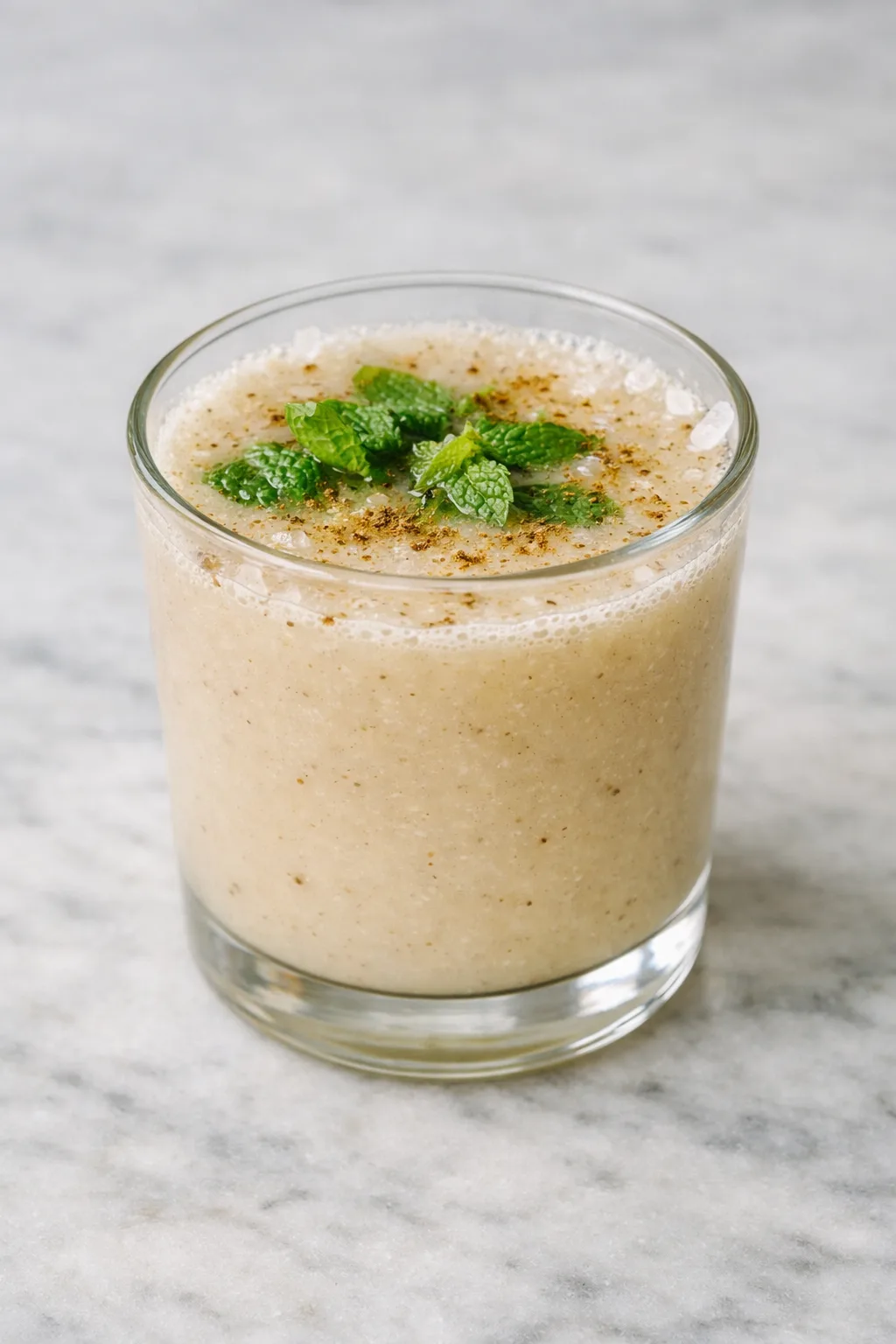
Ingredients
- 3 tbsp roasted barley flour (sattu)
- 1½ cups cold water
- Pinch rock salt
- ½ tsp roasted cumin powder
- Few mint leaves
Method
- Mix sattu flour with a little water first to remove lumps.
- Add remaining cold water, salt, and cumin. Stir well.
- Crush mint leaves, add to drink. Serve at room temperature or slightly cool.
Healing Purpose
Charaka recommends Sattu as a summer satiation drink — cooling to Pitta, drying to Kapha, sustaining without heaviness. Used by travellers and laborers in classical texts as a meal that does not aggravate the body under heat.
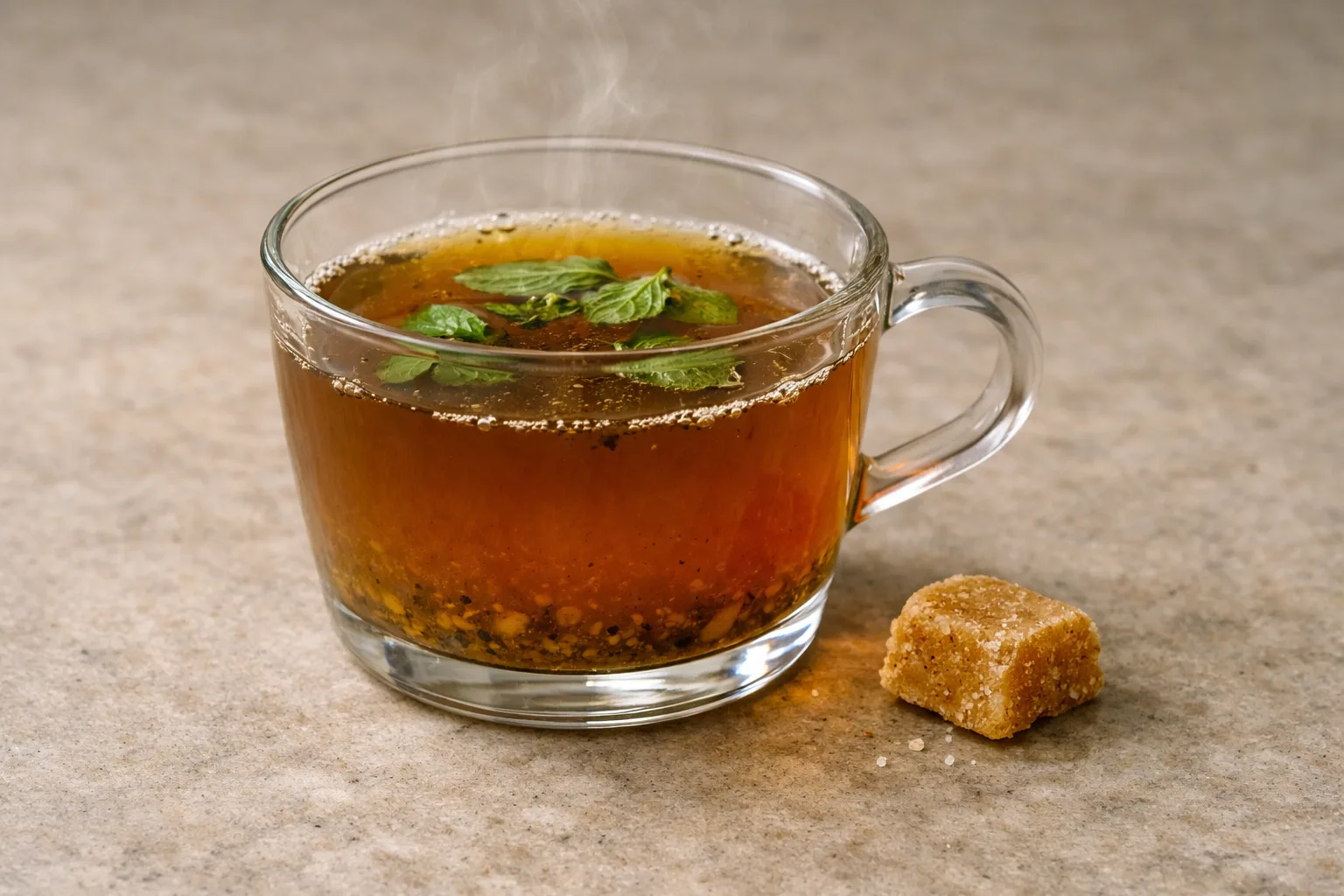
Ingredients
- 1 tsp dry ginger powder
- 2 cups water
- ¼ tsp black pepper
- 2–3 tulsi leaves (optional)
- Small jaggery piece — Vata only
Method
- Boil water with ginger and pepper.
- Simmer uncovered until reduced to 1 cup (10–15 minutes).
- Add tulsi in last 2 minutes. Strain.
- Add jaggery for Vata only. Sip warm before meals.
Healing Purpose
Shunthi is the most important single herb for kindling Agni and clearing Ama. The decoction concentrates its action for cold, congestion, slow digestion, and body ache from Ama accumulation.
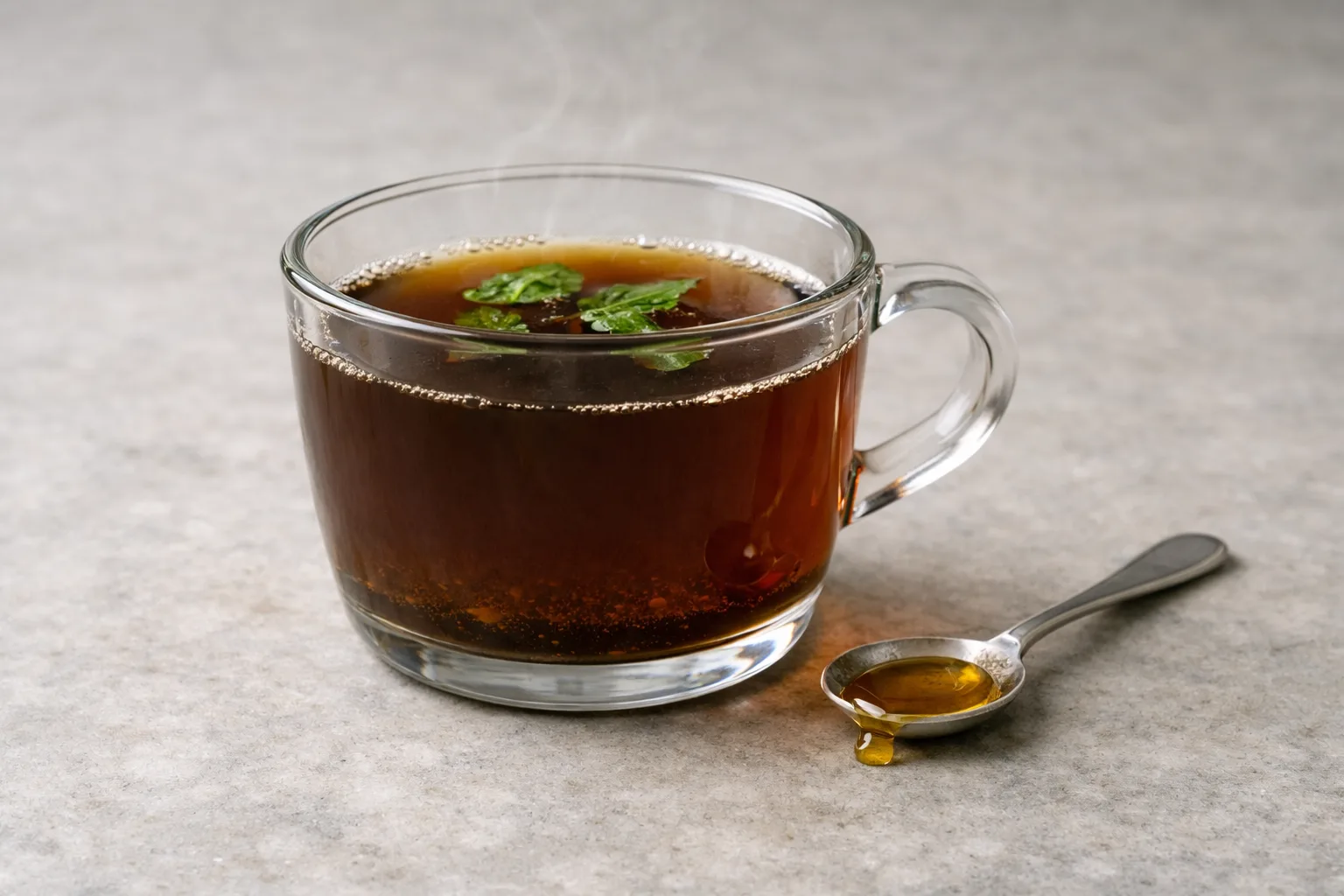
Ingredients
- 1 tsp Triphala powder (Amalaki + Bibhitaki + Haritaki)
- 2 cups water
- Small amount of honey (after cooling only)
Method
- Boil Triphala powder in water for 10 minutes.
- Reduce to 1 cup. Strain through a fine sieve.
- Allow to cool to lukewarm. Add honey only after cooling.
- Take at night before bed or in the morning on an empty stomach.
Healing Purpose
Triphala is the most widely prescribed classical formulation — balancing all three doshas, supporting elimination, nourishing the eyes, and gently cleansing the digestive tract without depleting. Described in classical texts as a Rasayana when taken consistently.
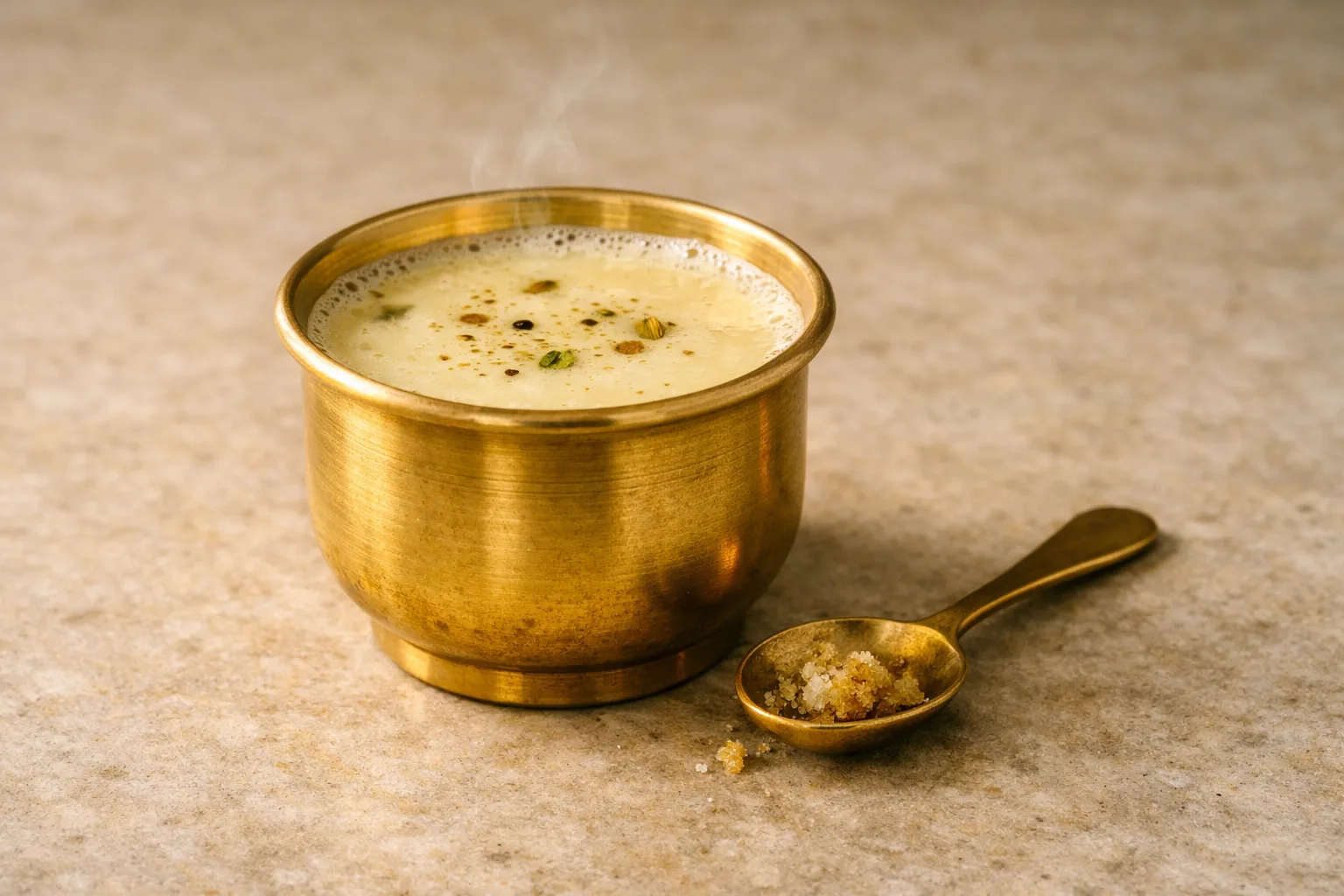
Ingredients
- 1 cup whole milk
- 1 cup water
- ¼ tsp shatavari powder
- ¼ tsp vidari kanda powder (or ashwagandha)
- Pinch of cardamom
- Small amount of raw sugar or jaggery
Method
- Combine milk, water, and herb powders in a small pot.
- Bring to a gentle boil, then reduce heat.
- Simmer until the water has evaporated and only 1 cup of milk remains.
- Add cardamom and sweetener. Drink warm before bed.
Healing Purpose
The method of boiling herbs in milk allows fat-soluble compounds to enter deep tissues. Used for Ojas building, post-illness recovery, reproductive health, and nourishing the dhatus (tissues) at their deepest level. The water acts as a medium that is then cooked off.
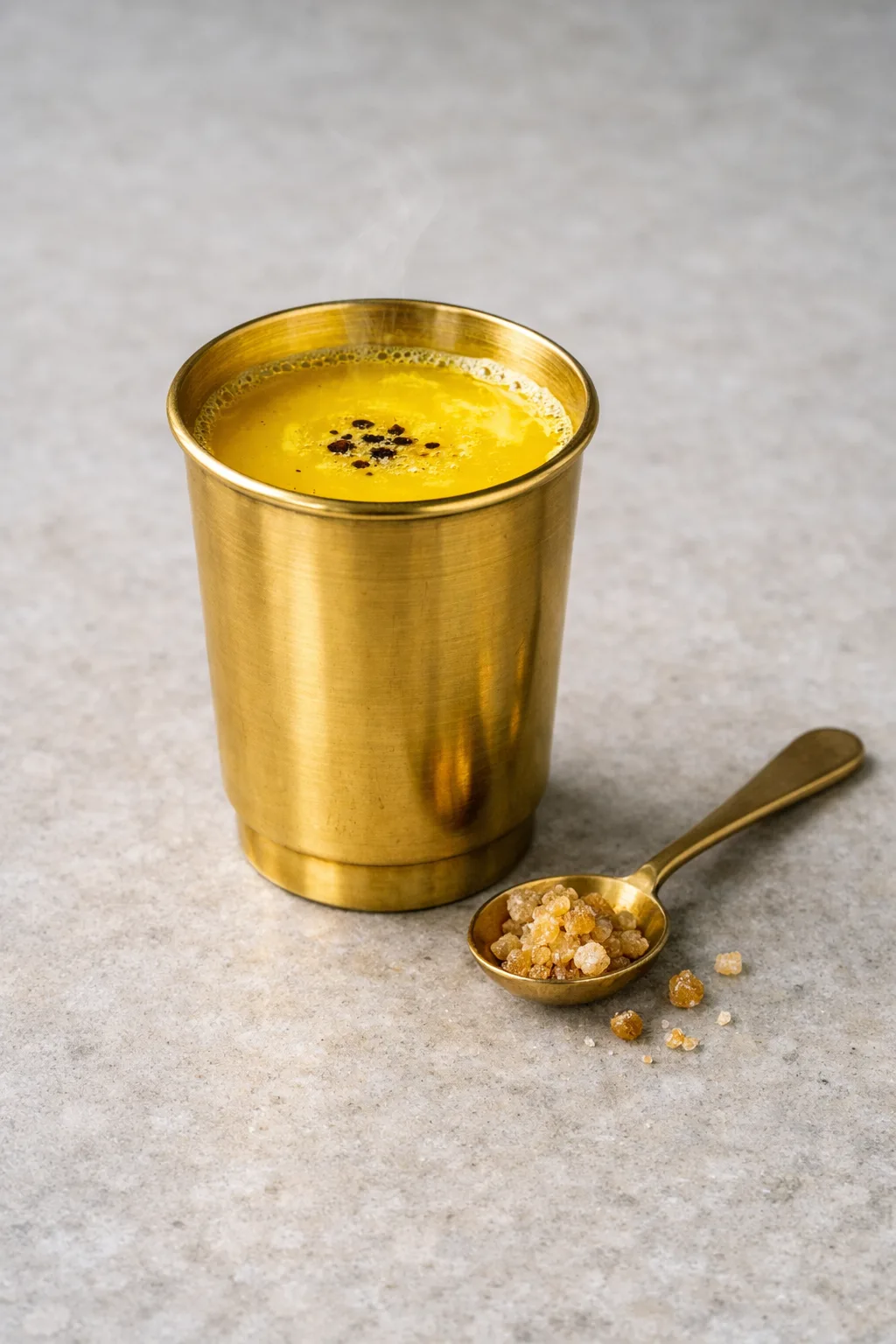
Ingredients
- 1 cup whole milk
- ½ tsp turmeric (haridra)
- Pinch of black pepper
- ¼ tsp ghee
- Small amount of jaggery or raw sugar
Method
- Warm milk over gentle heat. Do not boil aggressively.
- Add turmeric and black pepper — pepper activates curcumin absorption significantly.
- Stir in ghee. Add sweetener off heat.
- Drink warm before sleep. Best in winter and during illness.
Healing Purpose
Charaka describes turmeric in milk as anti-inflammatory, anti-Ama, and sleep-supporting. The fat in milk and ghee carries curcumin into the tissues. Recommended for joint inflammation, respiratory congestion, low immunity, and disturbed sleep.
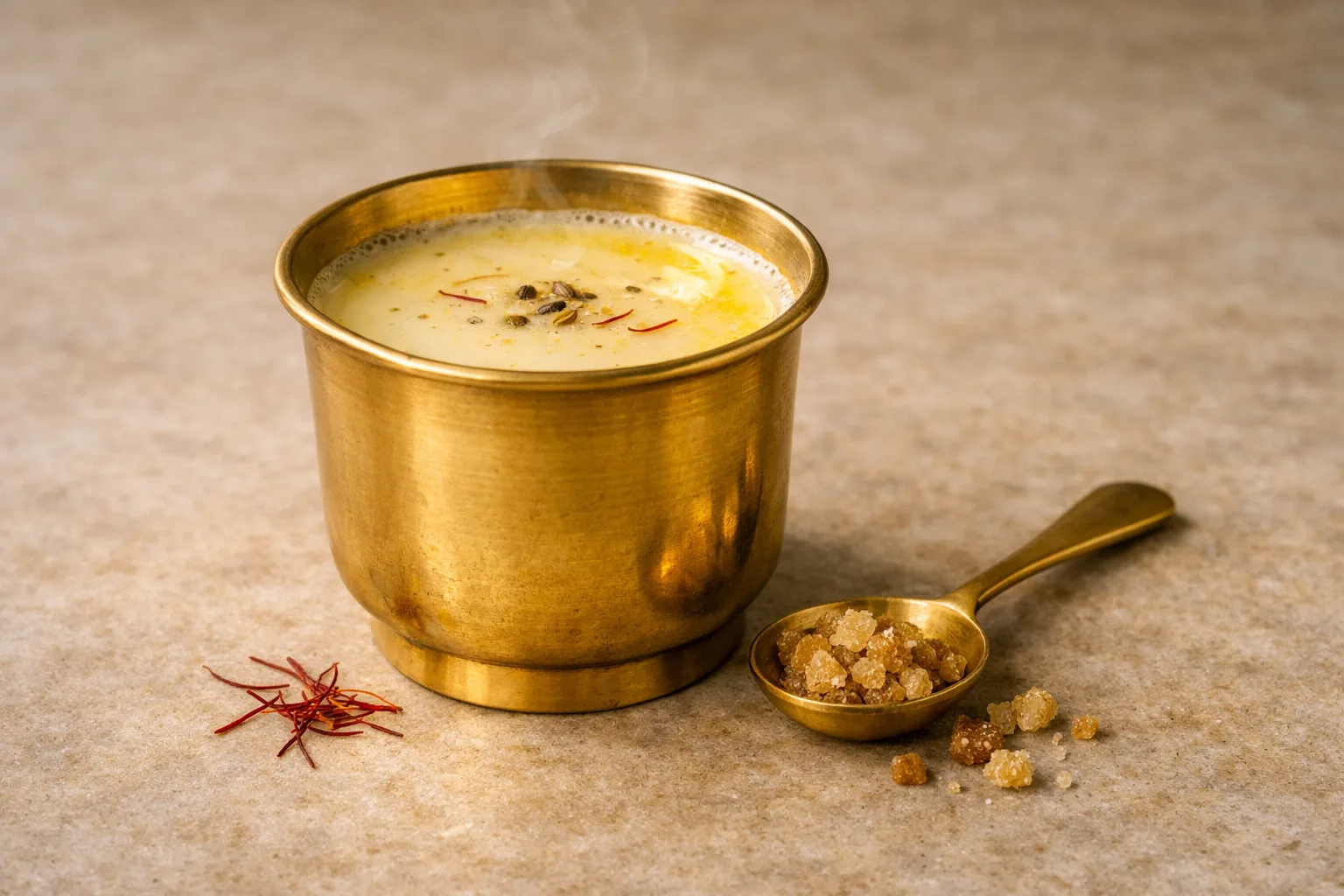
Ingredients
- 1 tsp ashwagandha root powder
- 1 cup milk
- 1 cup water
- Pinch of cardamom and saffron
- 1 tsp ghee
- Jaggery to taste
Method
- Boil ashwagandha powder in milk and water together.
- Simmer until reduced to 1 cup of liquid.
- Add cardamom, saffron, ghee, and jaggery off heat.
- Take at night before bed. Best in winter months.
Healing Purpose
Ashwagandha Kshirapaka is the classical formulation for fatigue, depletion, nervous system exhaustion, and low muscle mass. The texts describe it as building Shukra (reproductive tissue) and Ojas simultaneously. Best suited for Vata and those recovering from chronic illness.
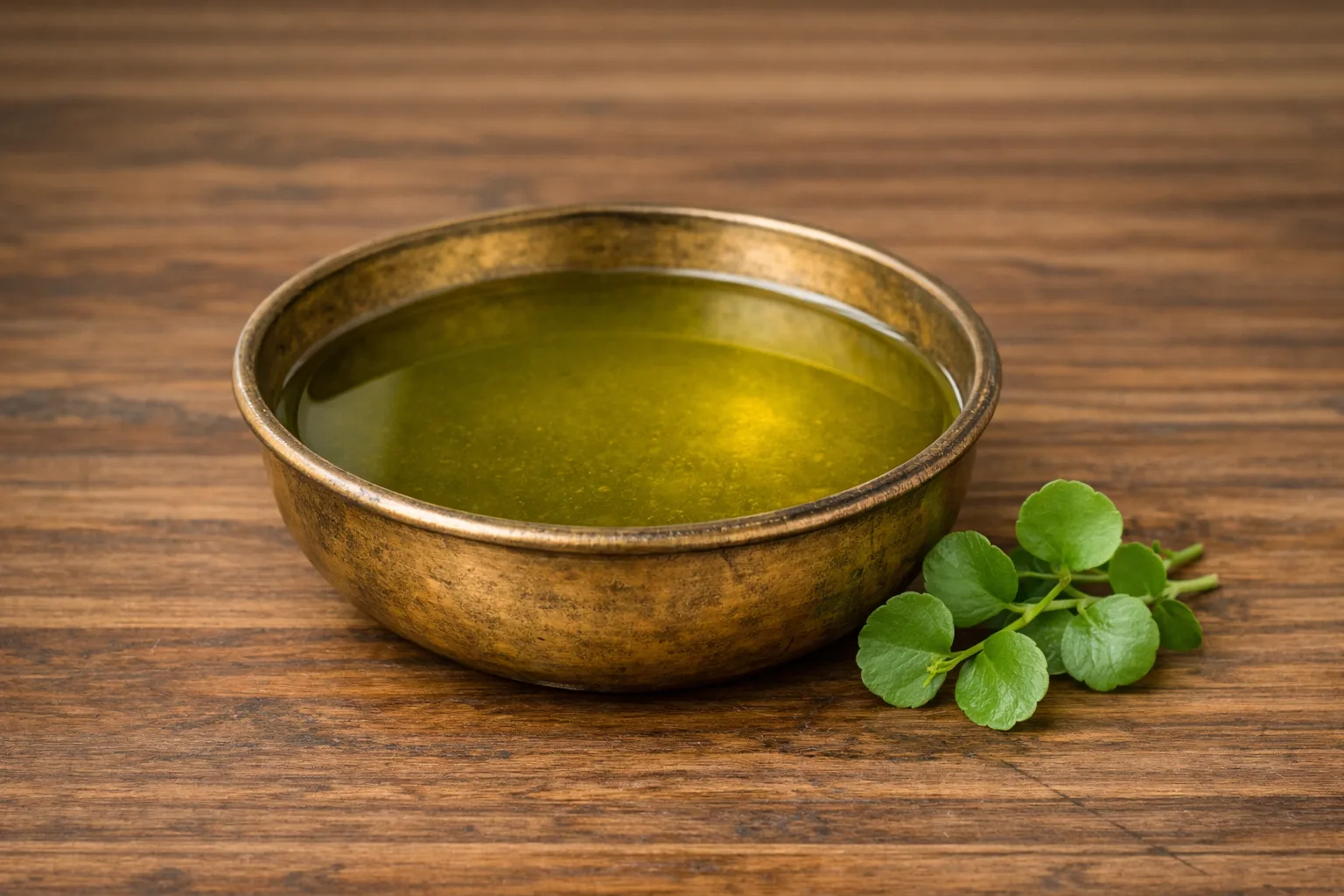
Ingredients
- 1 cup pure ghee (at room temp)
- 2 tbsp fresh Brahmi juice (or 1 tsp powder)
- ¼ tsp Shankhapushpi powder
- Pinch of black pepper
Method
- Warm ghee on very low heat until liquid but not smoking.
- Add Brahmi juice or powder and Shankhapushpi. Stir constantly.
- Cook on lowest heat for 10 minutes, stirring, until water content has cooked off (no more sputtering).
- Cool and strain. Store in glass jar. Take ½ tsp with warm milk or water in the morning.
Healing Purpose
The classical formulation for memory, mental clarity, and nervous system support. Ghee carries the lipophilic compounds of Brahmi across the blood-brain barrier — the mechanism classical texts describe as "entering the deeper channels." Used for anxiety, poor concentration, and epilepsy in classical medicine.
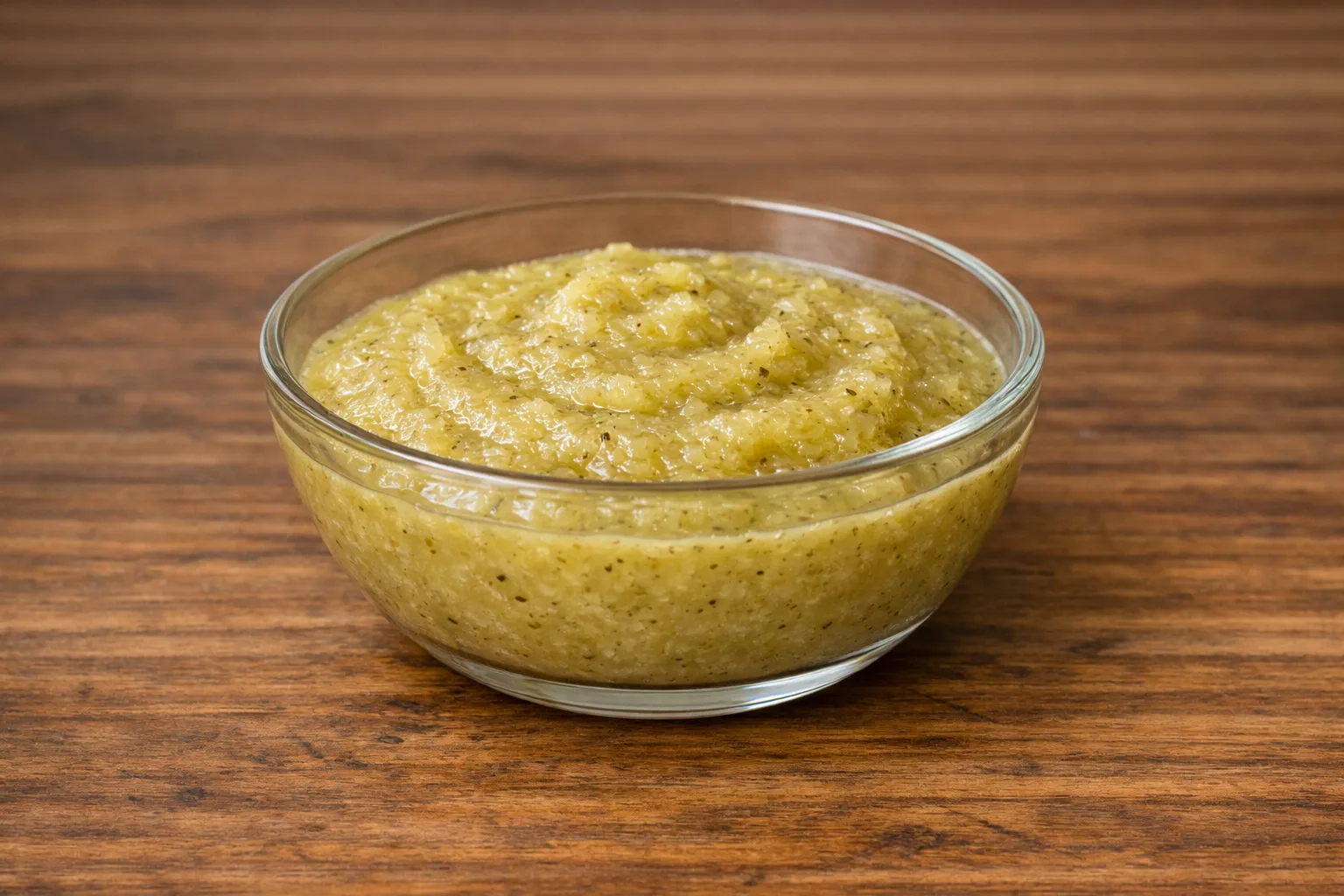
Ingredients
- 2 fresh amla (or 1 tsp powder)
- 1 tsp raw honey (unheated)
- ¼ tsp ghee (room temp)
- Pinch of rock salt
- Pinch of black pepper
Method
- Deseed and finely chop fresh amla, or measure powder.
- Mix with softened ghee, salt, and pepper into a paste.
- Let cool completely before adding honey — never combine honey with heat.
- Take 1 tsp each morning on empty stomach with warm water.
Healing Purpose
Placed above all other herbs in the Rasayana chapter for its capacity to build Ojas. Contains five of the six tastes. The highest natural source of Vitamin C. Taken daily, classical texts describe reversal of aging, sharpening of the senses, and deepening of immunity.
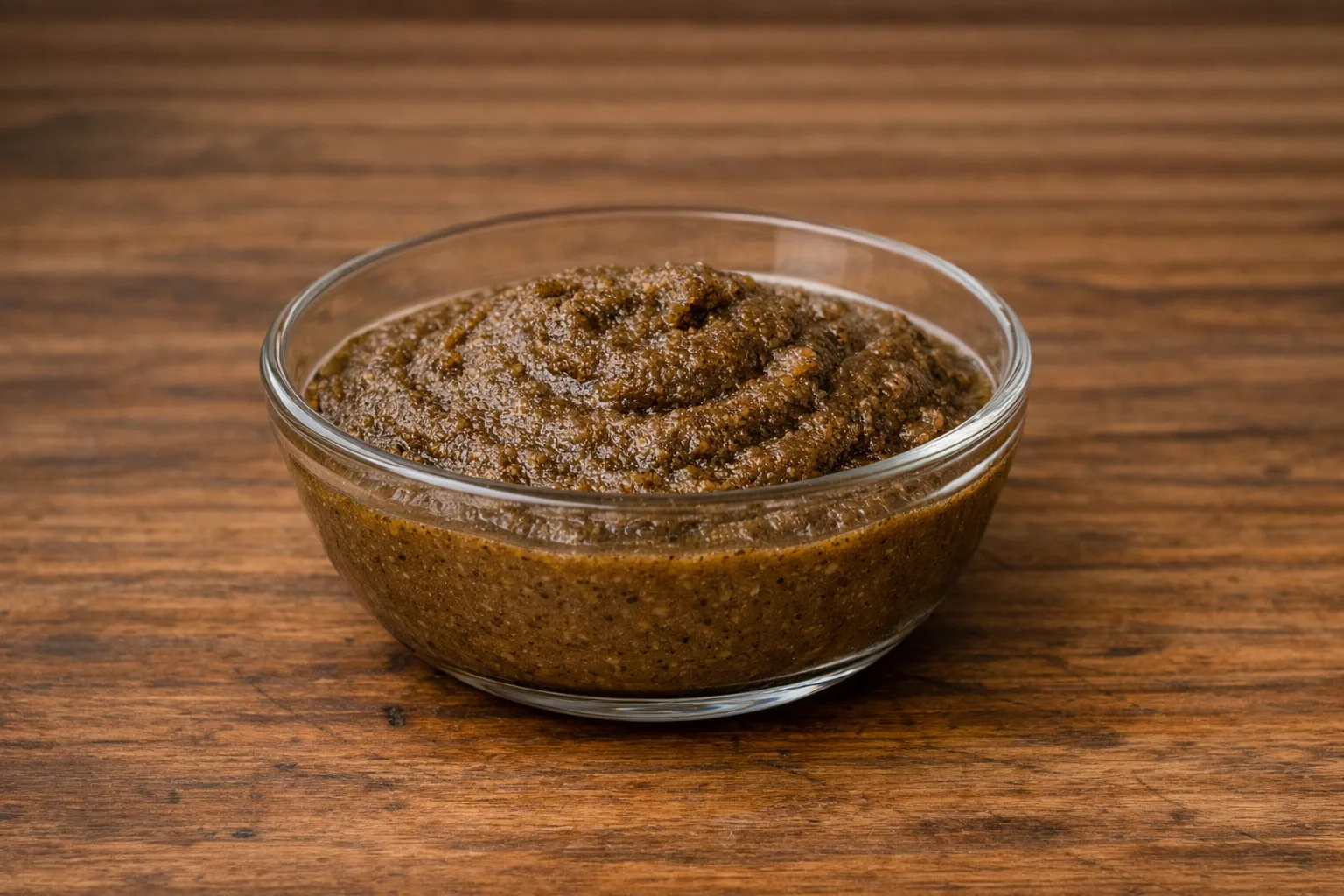
Ingredients
- ½ tsp Haritaki (Terminalia chebula) powder
- Anupana varies by season: rock salt (summer), sugar (autumn), dry ginger (winter), honey (spring)
- Warm water to follow
Method
- Mix Haritaki powder with the seasonal anupana (vehicle).
- Take the mixture directly or as a paste.
- Follow with warm water. Best taken after the evening meal.
- Haritaki changes anupana with each season — this is not optional in classical use.
Healing Purpose
Called the "mother of herbs" — Haritaki kindles Agni, supports elimination, sharpens intelligence, and is described as a Rasayana when taken with the correct seasonal vehicle. The Ashtanga Hridayam describes no disease that Haritaki cannot touch.
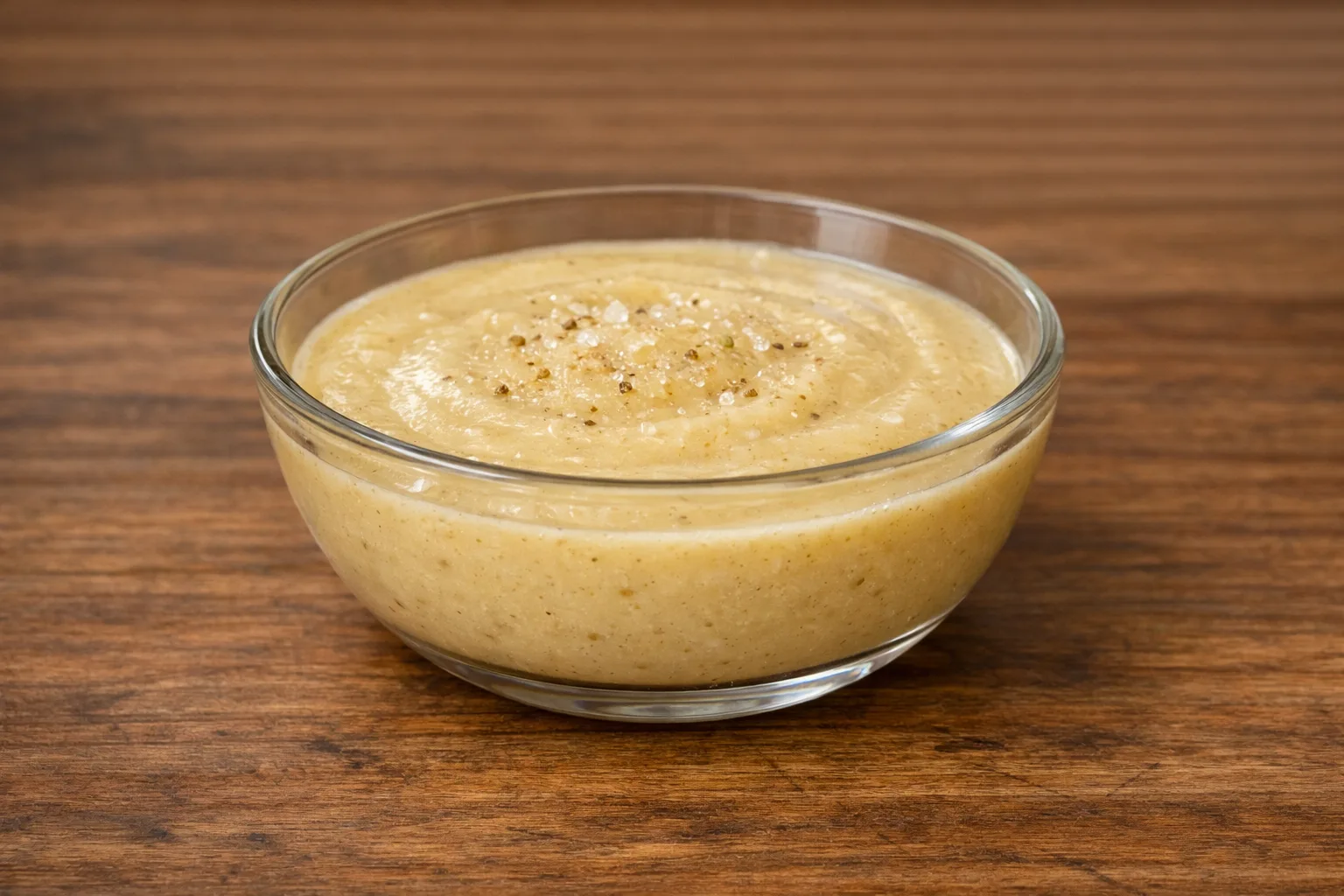
Ingredients
- ¼ cup roasted rice flour or barley flour
- 1 tbsp ghee
- 1 tsp raw sugar or jaggery
- Milk or water to mix
- Pinch of cardamom
Method
- Dry roast flour on a low pan until fragrant and slightly golden.
- Mix with ghee into a crumbly paste.
- Add sugar and cardamom. Combine with milk or water into a thick drink.
- Consume as a midday satiation preparation — not a full meal.
Healing Purpose
Tarpana means "that which satisfies" — the roasting pre-digests the grain starch, making it exceptionally easy to assimilate. Described as nourishing the Dhatus directly and building Ojas when taken with ghee. Prescribed for those who lose weight easily, for travellers, and in hot season.
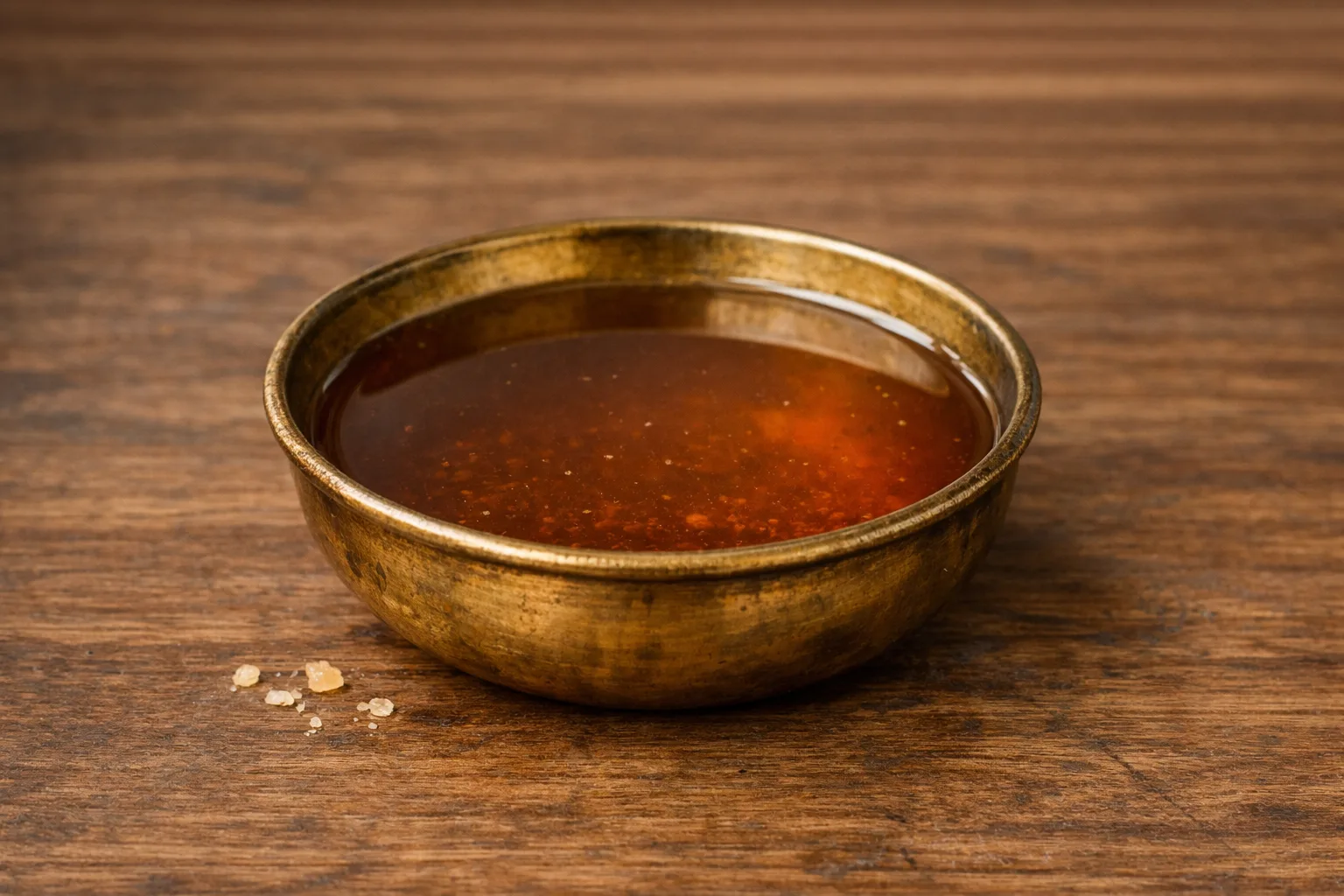
Ingredients
- 1 tsp carom seeds (ajwain)
- 2 cups water
- ¼ tsp dry ginger
- Pinch of black salt (kala namak)
Method
- Lightly crush carom seeds to release essential oils.
- Boil with water and ginger for 10 minutes.
- Reduce to 1 cup. Strain. Add black salt.
- Drink warm after meals or during episodes of gas and bloating.
Healing Purpose
Ajwain is the classical Ayurvedic specific for gas, bloating, intestinal spasm, and flatulence. Its essential oil (thymol) is antispasmodic and carminative. The decoction form concentrates its action and is faster-acting than taking seeds whole. Particularly effective in monsoon season when Vata rises.
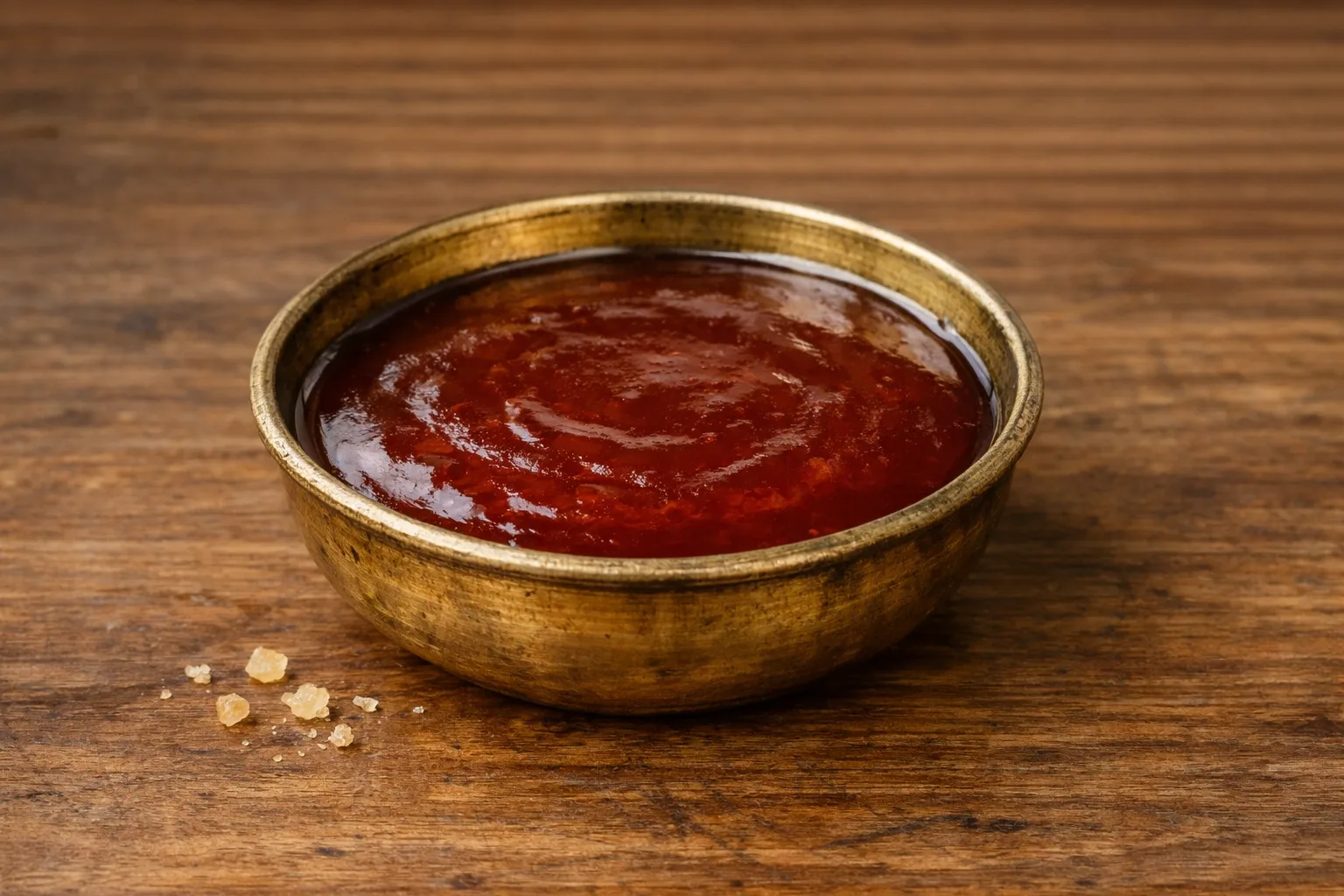
Ingredients
- ½ cup fresh pomegranate juice
- ¼ cup pure ghee
- Pinch of dry ginger
- Pinch of rock salt
- ¼ tsp long pepper
Method
- Combine ghee, pomegranate juice, and spices in a small heavy pan.
- Cook on low heat, stirring, until the juice has fully cooked off and only ghee remains (no more sputtering).
- Strain and cool. Store in a glass jar.
- Take ½ tsp before meals or with warm water for digestive support.
Healing Purpose
Charaka prescribes Dadimadi Ghrita for acid conditions of the digestive tract, hyperacidity, poor absorption, and cardiac Vata. Pomegranate is sour, which kindles Agni without heating Pitta excessively. The ghee medium carries pomegranate's constituents into the deeper digestive channels.
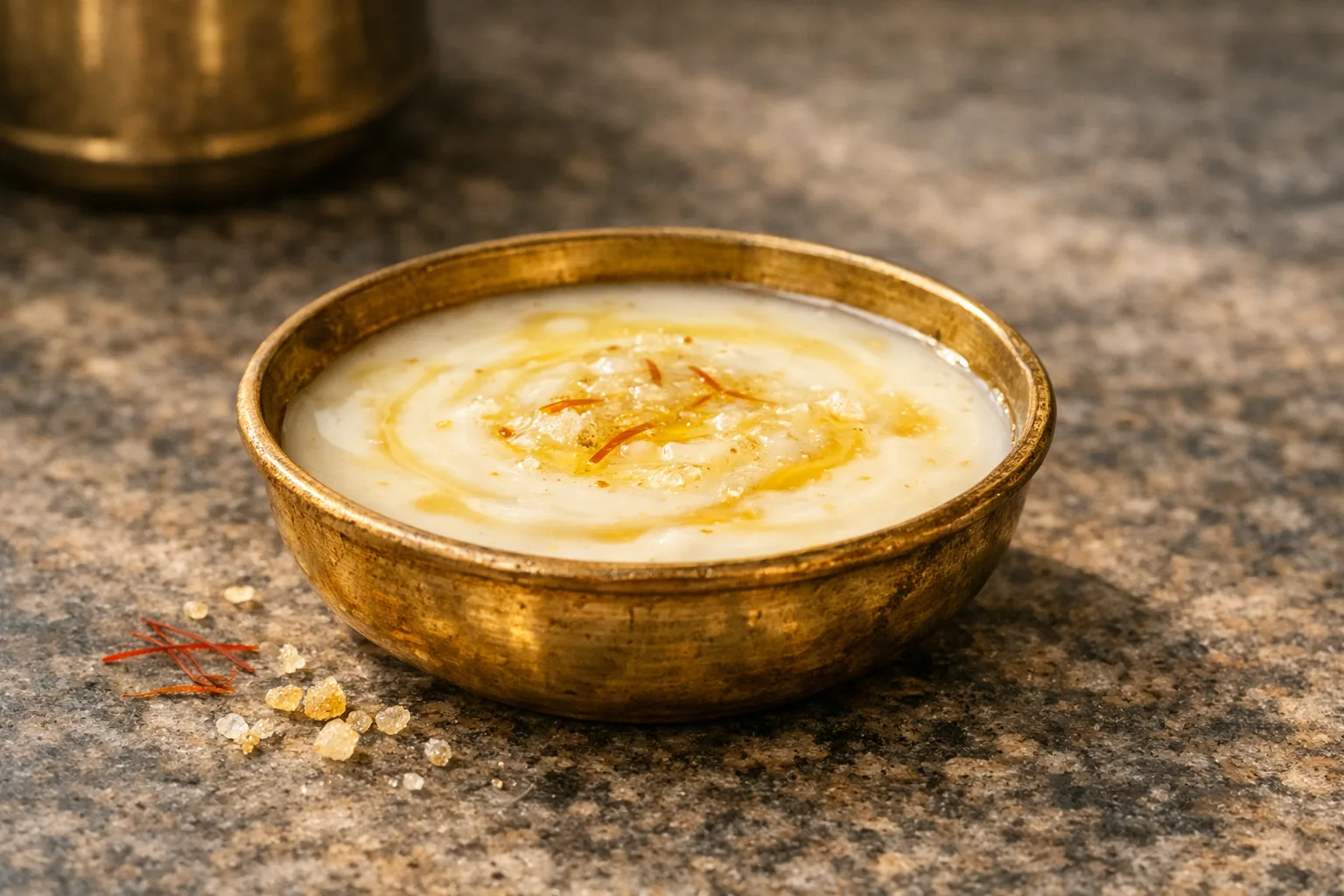
Ingredients
- 1 tbsp raw milk
- 1 tbsp plain yogurt
- 1 tsp pure ghee
- 1 tsp raw honey (room temp)
- 1 tsp raw sugar or jaggery
Method
- All five ingredients must be at room temperature — never combine honey with anything warm.
- Mix milk and yogurt first, then add sugar and stir until dissolved.
- Add ghee. Add honey last, stirring gently.
- Take 1–2 tsp in the morning on an empty stomach. Not a meal — a Rasayana dose.
Healing Purpose
Panchamrita bridges the sacred and the therapeutic in Ayurvedic medicine. Sushruta describes its five ingredients as representing the five elements, each contributing to Ojas, immunity, and tissue nourishment. Taken consistently, it is described as one of the most accessible Rasayana preparations available without specialised herbs.
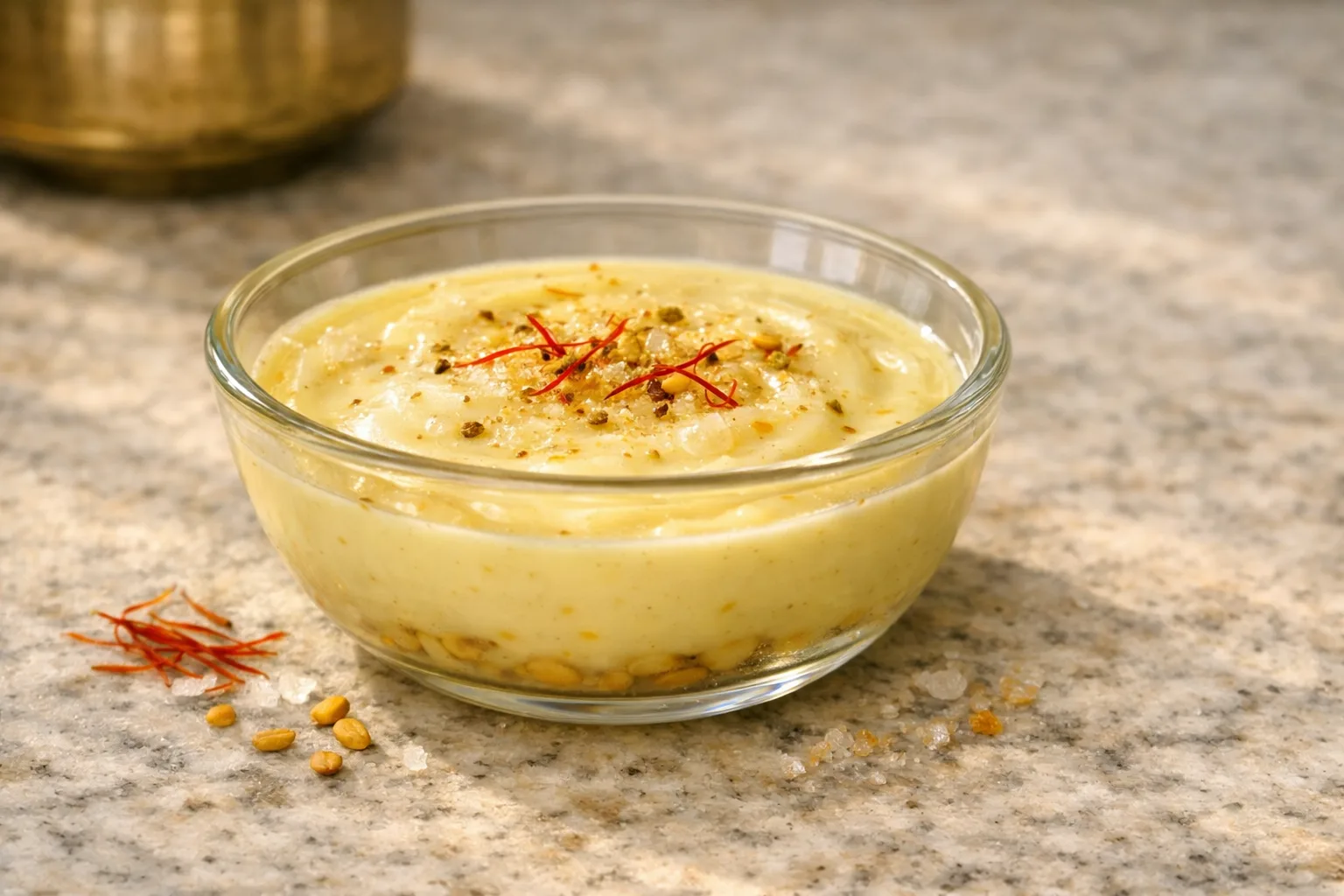
Ingredients
- ½ cup thick yogurt (room temperature)
- 1 tsp raw sugar
- Pinch of cardamom
- Pinch of black pepper
- Few strands of saffron in 1 tsp warm milk
Method
- Let yogurt come to room temperature — cold yogurt is heavy and Ama-forming.
- Dissolve saffron in warm milk, allow to cool.
- Mix yogurt with sugar, cardamom, and pepper.
- Add saffron milk. Serve at room temperature — never chilled. Best taken at midday, not at night.
Healing Purpose
Rasala is a summer preparation that nourishes Vata without heating Pitta — the spices make the yogurt digestible, the sugar cools, and the saffron supports mood and circulation. Bhavaprakasha recommends it specifically for those who are thin, anxious, or excessively fatigued in summer heat.
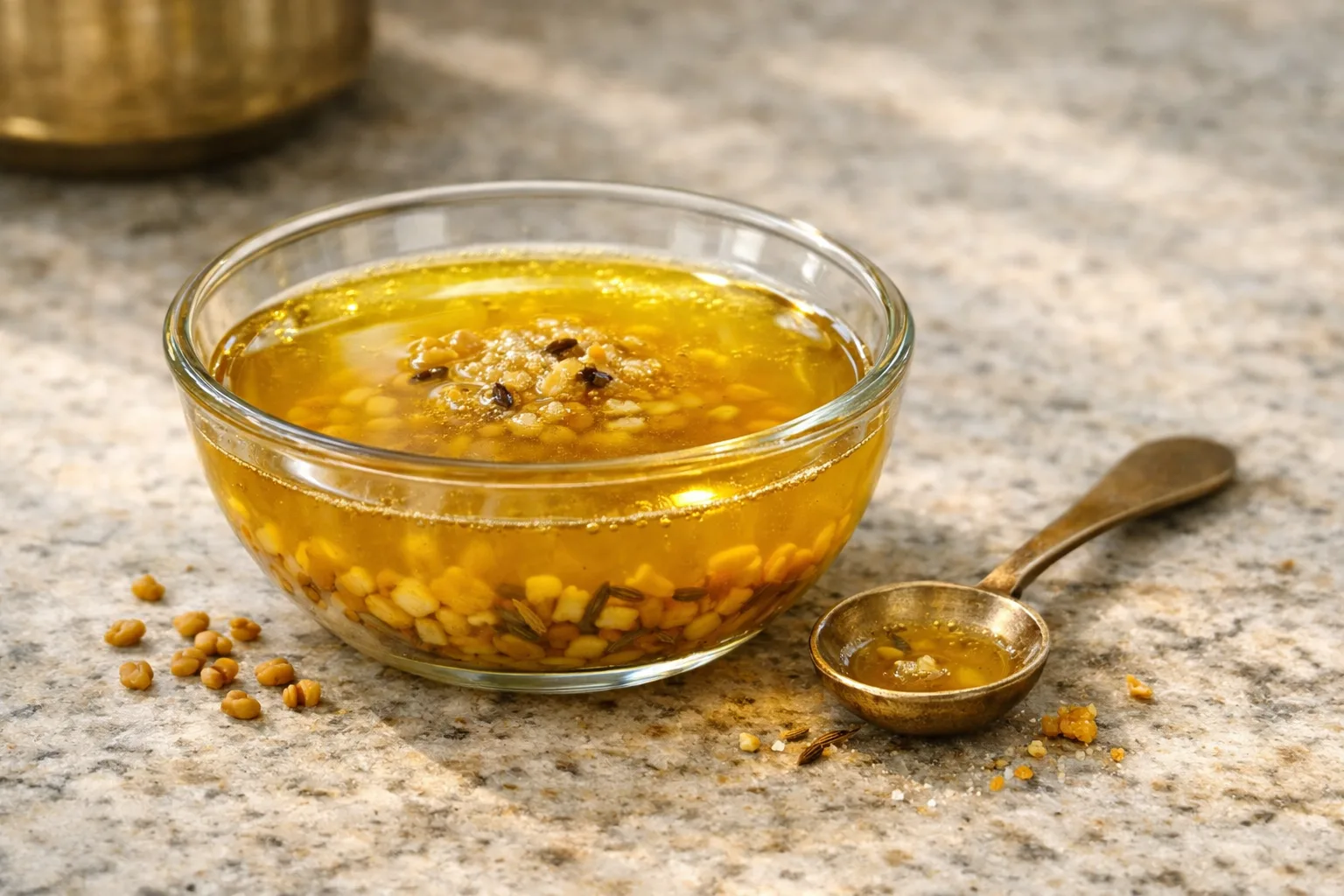
Ingredients
- 1 tbsp fenugreek seeds (methi)
- 3 cups water
- ½ tsp cumin seeds
- ¼ tsp turmeric
- Rock salt to taste
- ½ tsp ghee
Method
- Soak fenugreek seeds overnight. Drain.
- Boil soaked seeds with water and cumin for 30 minutes.
- Add turmeric. Strain out seeds — use only the broth.
- Add rock salt and ghee. Drink warm as a pre-meal preparation or with food.
Healing Purpose
Fenugreek is specifically mentioned for joint inflammation, blood sugar regulation, and postpartum recovery in classical texts. The broth (Yusha) form removes the astringency and gas-producing quality of the seeds while retaining the therapeutic action. Particularly valuable in cold, damp seasons when Kapha accumulates in the joints.
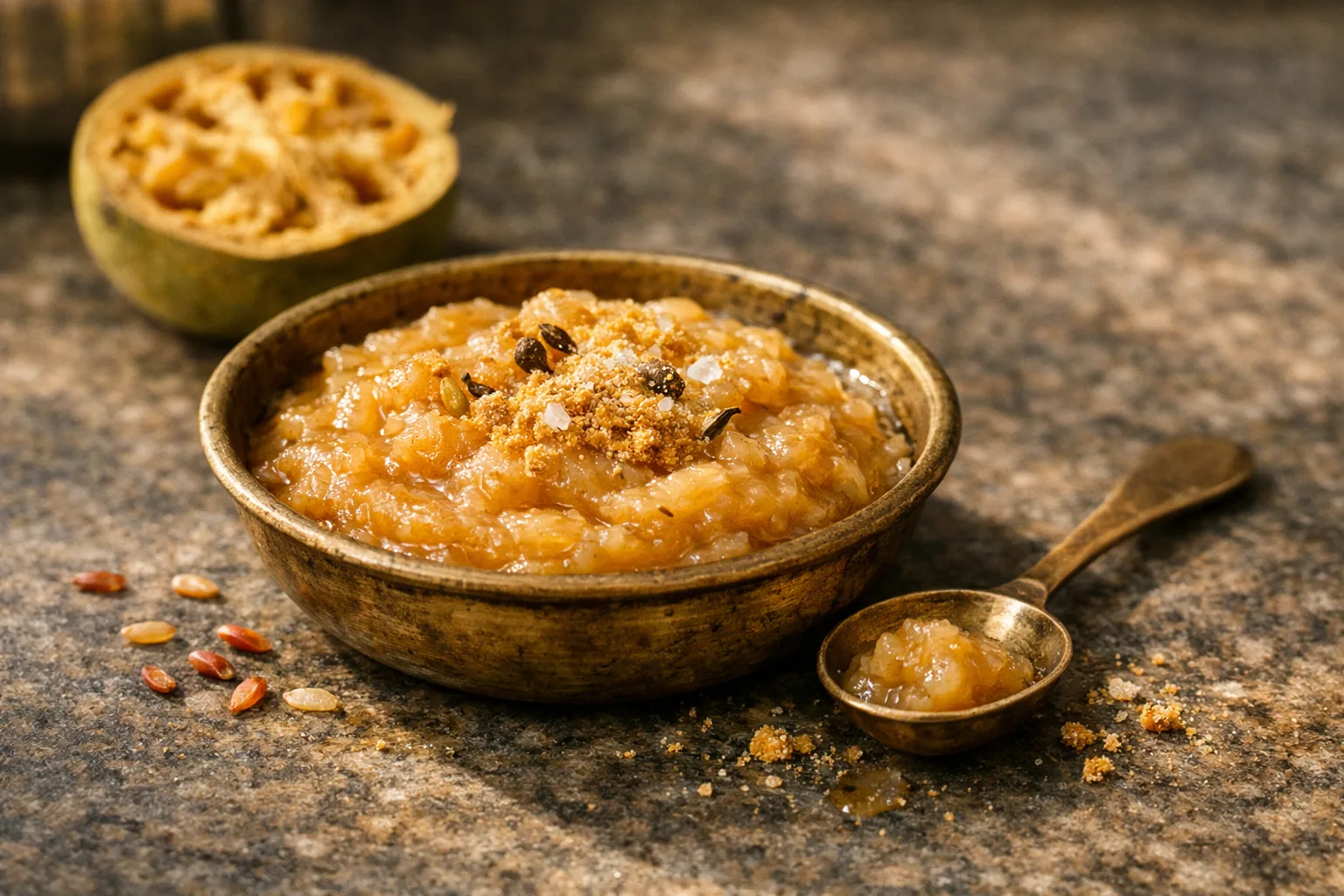
Ingredients
- 2 tbsp ripe bael (bilva) pulp — or 1 tsp bilva powder
- 1 tsp raw sugar
- Pinch of dry ginger
- Pinch of cardamom
- Water to thin if needed
Method
- If fresh: scoop out ripe bael pulp, remove seeds. Mash smooth.
- If powder: mix with a small amount of water into a thin paste.
- Add sugar, ginger, and cardamom. Mix well.
- Take 1–2 tsp before meals in summer, or during episodes of diarrhoea or IBS.
Healing Purpose
Bilva is the classical specific for IBS, chronic diarrhoea, and intestinal inflammation. The Rasayana chapter of Charaka Samhita places it among the herbs capable of deep gut healing. Unripe bael is astringent and binding; ripe bael is laxative and cooling — the two states have opposite indications.
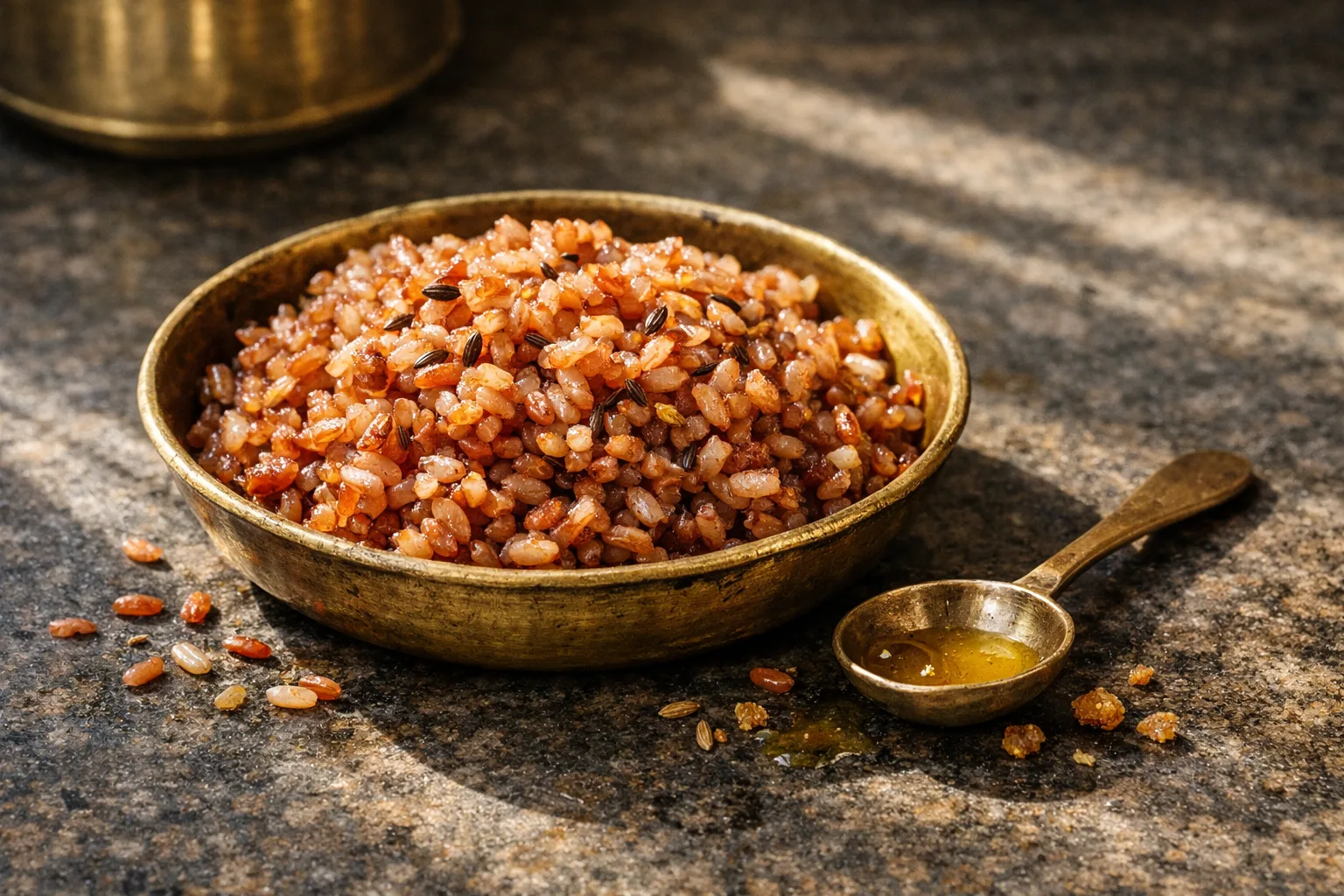
Ingredients
- ½ cup red rice (Shashtika or Kerala red rice preferred)
- 1½ cups water
- 1 tbsp ghee
- ¼ tsp cumin
- Rock salt to taste
Method
- Rinse red rice thoroughly. Soak 30 minutes.
- Cook with water on medium-low heat until absorbed and grains are tender (25–30 minutes).
- Warm ghee, add cumin until fragrant. Mix through cooked rice.
- Add salt. Serve as the main grain at the midday meal.
Healing Purpose
Ashtanga Hridayam specifically names Shashtika (60-day red rice) as the most therapeutic of all rice varieties. Unlike white rice, red rice retains the bran layer containing iron, magnesium, and the anthocyanins that support tissue building. Prescribed for strength, post-illness recovery, and those doing physical work.
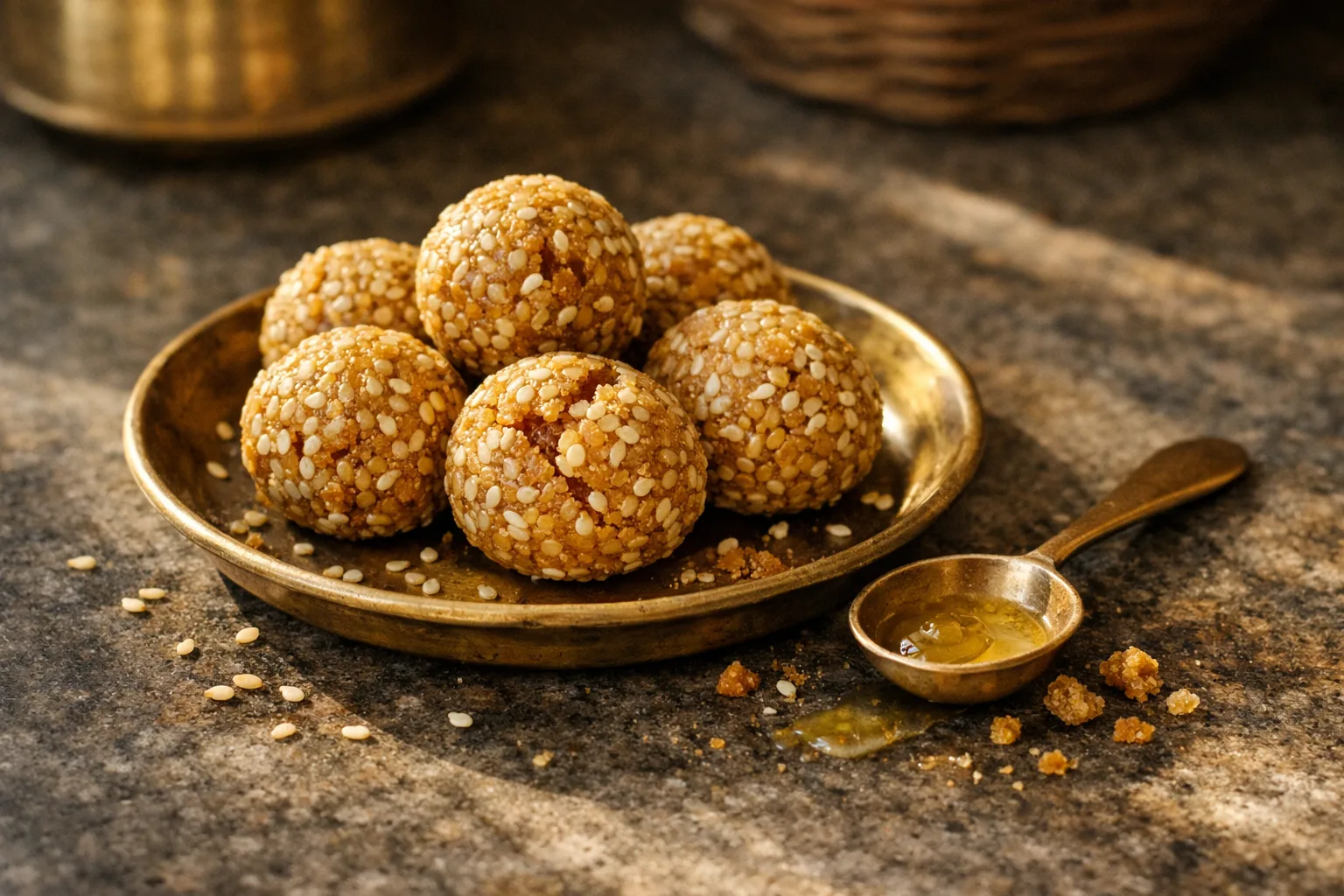
Ingredients
- 1 cup white sesame seeds (til)
- ¼ cup jaggery, grated
- 1 tsp ghee
- Pinch of cardamom
- Pinch of dry ginger
Method
- Dry roast sesame seeds on low heat until golden and fragrant. Do not burn.
- Melt jaggery in a small pan with ghee on very low heat.
- Remove from heat. Mix in sesame, cardamom, and ginger quickly.
- While still warm, roll into small balls. Store in a cool dry place. Take 1–2 balls daily in winter as a Rasayana.
Healing Purpose
Sesame is described in the Charaka Samhita Rasayana chapter as one of the most Ojas-building foods — heating, heavy, and nourishing for Vata. Tila Modaka is the traditional winter preparation that counteracts the drying, depleting quality of cold weather. Rich in calcium, iron, and healthy fats. The jaggery provides iron and the ghee carries sesame's lipid-soluble nutrients into the tissues.
Before You Cook — Ancient Preparation Tips
Small rituals that transform ordinary ingredients into medicine. Hover each card to learn why.
Soaking reduces phytic acid and tannins, dramatically cutting gas and bloating. Ayurveda calls these antinutrients a form of ama. Rinse well before cooking.
Pre-soaking activates natural enzymes, softens the grain, and shortens cooking time — preserving more prana in the rice by reducing heat exposure.
Spice compounds like curcumin and thymol are fat-soluble. Blooming them in ghee unlocks their full therapeutic potency and carries them into the tissues (dhatus).
High heat destroys enzymes and creates toxic by-products (acrolein in oils, glycation in sugars). Slow cooking preserves prana and is the Ayurvedic definition of mandagni cooking.
Even a pinch of turmeric provides anti-inflammatory curcumin, supports liver detox, and is described in Charaka Samhita as a universal lekhana (scraping) herb for clearing ama.
A small pinch of asafoetida (hing) prevents the gas-forming quality of legumes. It stimulates Agni, pacifies Vata, and is especially important for anyone with IBS or chronic bloating.
Cold water is described in Ashtanga Hridayam as agni-nasa — it douses digestive fire. Sip warm or room-temperature water; avoid drinking during meals as it dilutes digestive juices.
Bay leaf added while cooking dals and grains reduces bloating, aids protein digestion, and imparts a subtle warming quality — particularly helpful for Vata constitutions.
Sendha namak (rock salt) contains 84 trace minerals vs the 2 in table salt. It is described as tridosha-shamana — balancing to all three doshas — and is easier on the kidneys.
Solar noon corresponds to peak Pitta time, when digestive fire mirrors the sun. Charaka prescribes the main meal between 10 am and 2 pm when Agni can break down heavy foods most efficiently.
Reheated food is tamasic in Ayurveda — it has lost prana and begins accumulating toxic qualities within hours of cooking. Cook fresh at each meal whenever possible.
Milk and sour foods (citrus, yogurt, tomatoes) or salty foods create viruddha ahara — incompatible food combinations that produce ama in the gut and disrupt skin, digestion, and immunity.
Nuts contain enzyme inhibitors that block protein and mineral absorption. Overnight soaking deactivates them, making almonds, walnuts, and cashews far more digestible and nourishing.
Fresh ginger (ardraka) is cooling and more digestive; dry ginger (shunthi) is heating and more drying. Use fresh in summer and with Pitta, dry in winter and for Kapha and Vata conditions.
Fruit digests very quickly. Mixed with slower-digesting proteins or starches it ferments in the gut. Eat fruit 30 minutes before other foods, or as a separate meal to avoid ama formation.
Spiced buttermilk (takra) is called the best digestive in Charaka Samhita. A small cup after lunch kindles Agni, reduces bloating, and directly supports intestinal flora and healthy bowel function.
Copper vessels add trace copper ions (antimicrobial, alkalizing) to water stored overnight. Clay pots keep food alive and slightly porous, preserving prana better than sealed metal or plastic.
Cumin seeds (jeera) added to cooking rice aid absorption, reduce post-meal heaviness, and help the digestive system process starch more efficiently — a classic Ayurvedic kitchen staple.
Eating while anxious, rushed, or distracted switches the nervous system to fight-or-flight, shutting down digestive secretions. Ayurveda mandates a calm, seated, grateful state as the foundation of good digestion.
Ayurvedic texts describe nature's intelligence as embedded in seasonal produce. Eating what grows now in your region provides exactly the nutrients and qualities needed to balance the prevailing seasonal dosha.
Digestion begins in the mouth. Salivary amylase begins breaking down starches immediately. Charaka says food should be chewed until it is liquid — this alone prevents 80% of digestive complaints.
After sunset Agni naturally diminishes. A heavy evening meal leads to ama accumulation overnight. Ayurveda recommends a light, easy-to-digest dinner eaten before 7 pm for optimal overnight detox.
These Recipes Are a Beginning, Not a Protocol
Which of these preparations belongs in your kitchen depends on your constitution, your season of life, and the state of your Agni right now. Rahgvik’s Ayurvedic Cooking Classes teach you to read those signals — so you cook with precision, not just tradition.
Book a Free Discovery Call →